
Common Misconceptions About Numerology: Separating Myth From Meaning
Numerology has been part of human culture for thousands of years, yet it remains one of the most misunderstood belief systems in the modern world. From ancient temples in Greece to short videos explaining “angel numbers,” the practice has traveled a long road, and along the way it picked up a heavy load of myths, half-truths, and outright errors. This article walks through the most Common Misconceptions About Numerology, why they exist, and what the practice actually involves once the noise is stripped away.
Whether you’re a skeptic, a curious beginner, or someone who already uses numerology in daily life, clearing up these misunderstandings will help you form a more balanced, informed view of the subject. Numerology touches on history, psychology, spirituality, and pop culture all at once, which is exactly why it attracts so much confusion. By the end of this piece, you’ll have a clearer picture of where numerology myths came from, why they stick around, and how the practice actually functions once the exaggeration is removed.
What Numerology Actually Is
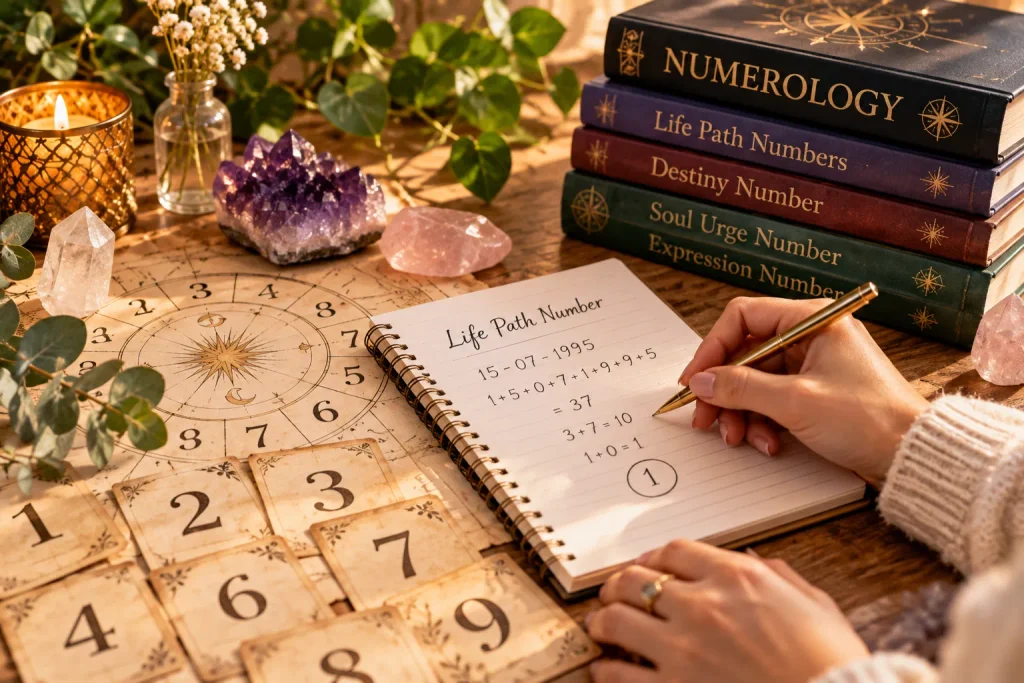
Before unpacking the myths, it helps to define numerology properly. At its core, numerology is a symbolic system that assigns meaning to numbers based on a person’s birth date, full name, or other personal details. Practitioners calculate figures such as the Life Path Number, Destiny Number, Soul Urge Number, and Expression Number, then interpret these figures as reflections of personality traits, tendencies, and life patterns.
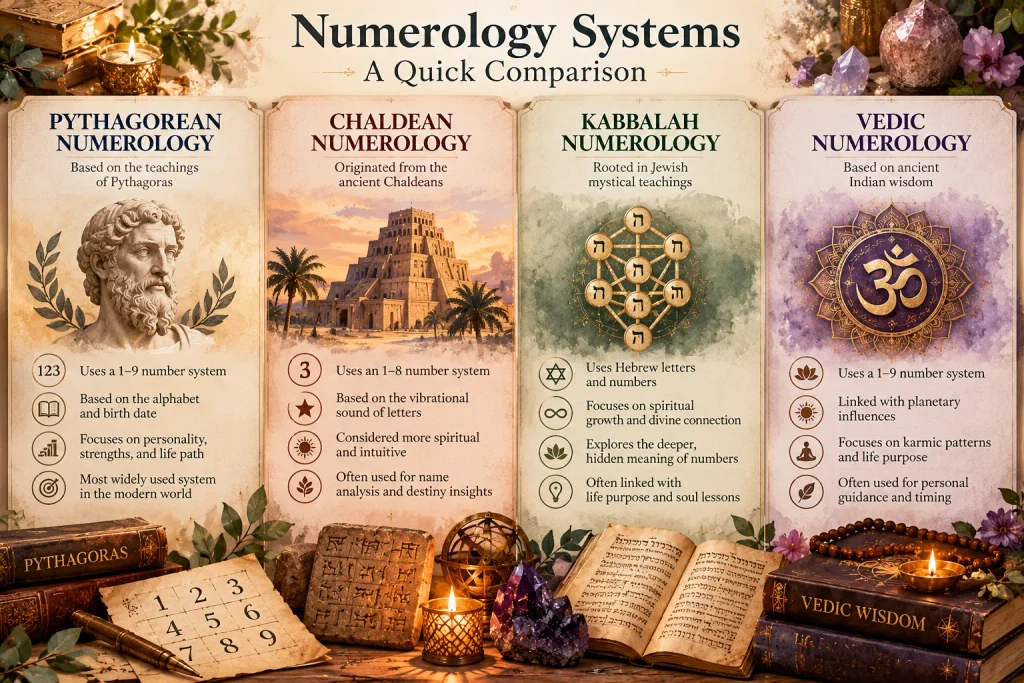
Numerology traces back to ancient civilizations, including the Babylonians and Chaldeans, and it was later formalized in the West through teachings attributed to Pythagoras, the Greek mathematician and philosopher. Over centuries, different schools emerged: Pythagorean numerology, Chaldean numerology, Kabbalah-based numerology, and Vedic numerology, each with its own calculation methods and symbolic framework.
Numerology is generally classified as a divination practice or a belief system rather than an empirical science. That single classification is the root of a great deal of confusion, because people often expect numerology to behave like a scientific discipline when it was never designed to function that way in the first place. Once this foundation is clear, the rest of the myths become much easier to untangle.
Where These Ideas Come From
The Common Misconceptions About Numerology that circulate today generally stem from three overlapping sources: confusion with other mystical practices such as astrology and tarot, exaggeration in movies, social media, and marketing, and simple lack of exposure to how numerology readings are actually conducted. Most people encounter numerology through a viral post or a two-line horoscope-style summary rather than through an actual reading or a book on the subject, and that shallow exposure leaves a lot of room for distortion.
Let’s break down the specific myths one at a time, starting with the most common Misconceptions and working toward the more subtle ones.
Misunderstanding 1: Numerology Can Predict the Future With Certainty
Perhaps the most widespread of all the misconceptions is the belief that numerology functions like a crystal ball, that it can tell you exactly what will happen next week, who you will marry, or when you will become wealthy. In reality, numerology does not claim to forecast specific events. It offers a framework for self-reflection, highlighting potential tendencies, strengths, and challenges based on numeric patterns rather than fixed, guaranteed outcomes.
Practitioners typically describe numerology readings as guidance rather than prophecy. A Life Path Number might suggest someone leans toward leadership or creativity, but it does not specify dates, names, or precise life events. Treating numerology as a fortune-telling machine is one of the clearest examples of a common misconceptions distorting the practice’s actual purpose, and it sets unrealistic expectations that the system was never built to meet.
Misunderstanding 2: Numerology and Astrology Are the Same Thing
Another widespread myth involves conflating numerology with astrology. While both fall under the broader umbrella of divination and symbolic belief systems, they operate on entirely different foundations. Astrology interprets the positions of celestial bodies, including the sun, moon, planets, and zodiac signs, at the moment of birth. Numerology, by contrast, relies purely on numbers derived from birth dates and names, with no reference to planetary movement at all.
Someone might check their horoscope for daily guidance and also calculate their Life Path Number, but the two systems use different logic, different calculations, and entirely different symbolic languages. Lumping them together ignores centuries of distinct tradition on both sides and is one of the more common Misconceptions sources of confusion for beginners exploring numerology for the first time.
Misunderstanding 3: Numerology Is Backed by Scientific Proof
Among the more damaging beliefs is the claim that numerology has been scientifically validated. No peer-reviewed research supports the idea that birth-date numbers causally influence personality or destiny. Numerology is widely categorized as pseudoscience, alongside several other symbolic practices that rely on interpretation rather than measurable, repeatable evidence.
That said, this does not automatically mean numerology has zero value to the people who practice it. Many belief systems, including numerology, function as tools for reflection rather than empirical prediction, similar to journaling prompts or personality quizzes. The real issue arises specifically when numerology is marketed or believed to carry scientific legitimacy, a claim that psychology and mainstream science simply do not support. This is one of the Common Misconceptions About Numerology that causes the most friction between believers and skeptics online.
Misunderstanding 4: Only Mystics or “Spiritual People” Use Numerology
There’s a persistent stereotype that numerology is reserved for tarot readers, mystics, or people deeply immersed in occult practices. This is far from accurate. Numerology today is used by a wide range of people, some purely for entertainment, others for personal growth, and some as a casual hobby similar to reading a horoscope column over morning coffee.
Business owners sometimes use numerology when naming companies. Parents occasionally consult it when choosing baby names. Everyday people check numerology compatibility before starting relationships, and some even use personal year numbers to plan major decisions like moving cities or changing careers. The audience for numerology is far broader than the stereotype suggests, which makes this one of the more socially rooted Common Misconceptions About Numerology in everyday conversation.
Misunderstanding 5: Your Life Path Number Defines Your Entire Personality
Many beginners assume that a single number, their Life Path Number, captures everything about who they are. In practice, numerology charts typically combine several figures: the Destiny Number, Soul Urge Number, Personal Year Number, and sometimes Master Numbers like 11, 22, or 33, each contributing a different layer to the overall interpretation.
Reducing an entire personality to one digit oversimplifies a system that, even by its own internal logic, relies on multiple calculations working together to form a complete picture. This oversimplification is a recurring theme across numerology myths, largely fueled by short-form social media content that flattens complex ideas into single, shareable soundbites rather than full explanations.
Misunderstanding 6: Numerology Is Just Modern Superstition With No History
Some skeptics assume numerology is a recent invention, perhaps tied to internet culture and viral “angel numbers” content that floods social media feeds. In truth, numerology has documented roots stretching back over two thousand years, with connections to ancient Greek philosophy, Babylonian mathematics, and various religious and mystical traditions across many cultures and centuries.
Dismissing numerology as a shallow modern trend overlooks its long, layered history, even though modern platforms have undeniably reshaped how the practice is consumed today, often stripping away nuance in favor of quick, digestible content. This mix of old tradition and new packaging fuels several Common Misconceptions About Numerology, since audiences rarely see the historical depth sitting behind the short, viral posts they scroll past.
Misunderstanding 7: Numerology Removes Free Will
A subtler myth involves the relationship between numerology and personal choice. Critics often argue that if numerology assigns fixed traits based on birth numbers, it strips away agency and reduces destiny to a rigid formula. Most practitioners, however, describe numerology as offering tendencies and potential paths rather than fixed, unavoidable outcomes.
This nuance is frequently lost in translation. A Life Path Number might suggest a natural inclination toward leadership, but it doesn’t claim to override choice, effort, or circumstance. The idea that numerology eliminates free will is a philosophical misreading, and it belongs on the list of numerology myths that stem from oversimplified interpretations rather than the practice’s actual claims about human behavior.
The Psychology Behind Why These Ideas Persist
Understanding why so many misconceptions continue to spread requires a look at basic psychology. Two concepts explain much of it: confirmation bias and the Barnum Effect, also known as the Forer Effect.
Confirmation bias describes the human tendency to notice and remember information that confirms existing beliefs while quietly ignoring information that contradicts them. If someone believes their Life Path Number predicts stubbornness, they will likely remember every stubborn moment vividly and forget the countless times they were actually flexible and easygoing.
The Barnum Effect refers to the tendency to accept vague, general personality descriptions as highly accurate and personally tailored, even when the same description could realistically apply to almost anyone. Numerology readings often use broad language, phrases about creativity, ambition, or sensitivity, that feels deeply personal but could describe a large percentage of people reading it. This psychological mechanism plays a major role in why numerology feels convincing, regardless of whether it holds up under scientific scrutiny or controlled testing.
These two effects, combined with cognitive bias in general, help explain the emotional pull of numerology even among people who intellectually understand its pseudoscientific status. Recognizing this doesn’t necessarily discredit the practice; it simply adds important context to the ongoing debate around Common Misconceptions About Numerology and why they feel so convincing in the moment.
Numerology Systems: A Quick Comparison
Given how many myths stem from a lack of understanding about numerology’s variety, it’s worth briefly outlining the major systems practiced around the world today:
- Pythagorean Numerology — The most widely used system in Western countries, based on assigning numeric values to letters using a simple one-to-nine grid.
- Chaldean Numerology — An older system originating in ancient Babylon, using a different letter-to-number assignment and placing heavy emphasis on vibration and sound.
- Kabbalah Numerology — Rooted in Jewish mysticism, this system focuses heavily on the Hebrew alphabet and layered spiritual symbolism.
- Vedic Numerology — Originating in India, this system draws direct connections between numerology and astrology, particularly planetary influences on personality.
Each system can produce different results for the same name or birth date, which is itself a frequent source of confusion. Someone who gets one number from a Pythagorean calculation and a different number from a Chaldean calculation might assume the whole practice is inconsistent or fraudulent, when really they have simply compared two distinct traditions using two different sets of rules. This methodological mix-up is one of the more technical Common Misconceptions About Numerology and rarely gets addressed in casual, bite-sized content online.
How to Separate Numerology Myths From Numerology Facts
For anyone trying to form an informed opinion, a few practical guidelines can help sort fact from fiction without needing a background in either mysticism or science:
- Treat numerology as symbolic, not predictive. It offers reflection prompts and possibilities, not guarantees about specific events.
- Understand which system is being used. Pythagorean, Chaldean, and Vedic numerology can yield noticeably different results for the same person.
- Recognize the Barnum Effect. Broad, flattering descriptions can feel accurate without being specifically or uniquely true to you.
- Separate numerology from astrology. The two share cultural space but rely on entirely different calculations and traditions.
- Acknowledge its pseudoscientific status. Enjoying numerology as a reflective tool doesn’t require believing it’s empirically proven.
- Look for balanced sources. Content that promises absolute certainty is usually simplifying, or exaggerating, the practice for engagement.
Following these steps won’t eliminate every myth overnight, but it meaningfully reduces the influence of the misunderstandings that circulate in casual conversation and short-form online content.
Frequently Asked Questions
Does numerology actually work?
“Working” depends on what you’re measuring. As a predictive science, no credible evidence supports it. As a reflective, symbolic tool similar to journaling, many people find it genuinely useful for organizing their thoughts about personality and life direction.
Is numerology the same as astrology?
No. They’re related mystical practices, but numerology uses numbers from names and birth dates, while astrology uses the positions of celestial bodies. This mix-up is one of the most frequent numerology myths among beginners.
Can numerology tell me who I’ll marry?
No. Numerology does not identify specific people, dates, or guaranteed events. Compatibility readings suggest general dynamics between two number profiles, not verified predictions about a specific relationship’s outcome.
Why does numerology feel so accurate sometimes?
This is largely explained by the Barnum Effect and confirmation bias. Broad, flattering statements feel personal even when they could apply to a wide range of people, and we tend to remember the hits while forgetting the misses.
Numerology Compatibility: Another Layer of Confusion
Relationship compatibility is one of the most searched numerology topics, and it comes with its own set of Common Misconceptions About Numerology. Many people assume that if two Life Path Numbers don’t traditionally “match” according to a chart they found online, the relationship is doomed from the start. In practice, numerology compatibility looks at how two number profiles might interact, highlighting potential friction points and natural strengths rather than issuing a pass-or-fail verdict on a relationship.
Compatibility charts vary between practitioners and schools, much like the broader system comparisons discussed earlier. A pairing considered challenging in one tradition might be described as complementary in another. Treating any single compatibility chart as the final word ignores this variation and feeds directly into the same oversimplification problem that shows up throughout numerology culture. A more balanced approach treats compatibility readings as conversation starters about communication styles and values, not as binding verdicts on whether two people belong together.
Numerology in Pop Culture and Social Media
Social media has changed how numerology spreads, and not always for the better. Short videos built around “angel numbers” like 111 or 1111 often present numerology as a constant stream of mystical signs waiting to be decoded, stripped of the calculation-based framework that traditionally defines the practice. This trend has introduced a newer wave of confusion, blending numerology with general spiritual signs, synchronicities, and manifestation culture until the lines between them blur completely.
While angel numbers can be loosely connected to numerology symbolism, they represent a fairly narrow, modern offshoot rather than the full discipline. Viewers who only encounter numerology through this lens often miss the calculation methods, historical systems, and personality frameworks that make up the bulk of traditional practice. This gap between the viral version and the traditional version explains why so many people hold an incomplete picture of what numerology actually involves, and it adds yet another layer to the broader pattern of misunderstanding surrounding the subject.
For readers trying to build genuine literacy on the topic rather than absorbing fragments from a feed, it helps to seek out longer explanations, historical context, and multiple numerology systems rather than relying solely on short clips. Doing so naturally clears up several Common Misconceptions About Numerology at once, since context and comparison are usually enough to replace an oversimplified claim with a fuller, more accurate understanding.
Why These Misconceptions Matter
It might seem harmless to let a few myths slide, but persistent misunderstandings can shape real decisions, from how people approach relationships and career choices to how much money they spend on readings, courses, or personalized reports. Someone convinced that numerology guarantees a specific future might make major life decisions based on incomplete or exaggerated information rather than genuine reflection.
On the other hand, dismissing numerology entirely as baseless superstition ignores its long-standing cultural and psychological role across many societies. Millions of people use numerology similarly to journaling or meditation, as a structured way to reflect on personal patterns and life transitions. Some use it during major transitions, such as starting a new job or moving to a new city, simply as a prompt to pause and think through their priorities rather than as a literal instruction manual for the future.
There’s also a practical, everyday angle worth mentioning. Numerology-based reflection can double as a light conversation starter, a creative naming tool, or even a fun icebreaker at social gatherings, none of which require anyone to accept it as scientifically proven. Treating it purely as entertainment or a casual reflective exercise, rather than a certainty machine, sidesteps most of the friction that these myths tend to create in the first place. Correcting the Common Misconceptions About Numerology doesn’t mean discrediting the practice altogether; it means giving people accurate context so they can decide, with clear eyes, how much weight to give it in their own lives and decisions.
Final Thoughts
Numerology sits in an interesting cultural space: part ancient tradition, part modern trend, and frequently misunderstood on both fronts at once. The Common Misconceptions About Numerology explored in this article, from mistaking it for guaranteed prophecy to confusing it with astrology to assuming it has scientific backing, largely stem from a lack of exposure to how the practice actually works and the psychology behind why it feels so convincing in daily life.
Numerology isn’t inherently deceptive, nor is it scientifically validated. It exists in the same category as many symbolic and reflective practices, meaningful to those who use it thoughtfully, misleading only when misunderstood or misrepresented online. By addressing these misunderstandings directly, readers can approach the subject with a more balanced, informed perspective rather than relying on stereotypes, viral trends, or oversimplified social media content.
Whether numerology becomes a genuine part of someone’s self-reflection toolkit or simply an interesting piece of cultural history, understanding the truth behind these Common Misconceptions About Numerology is the first step toward engaging with the practice honestly, thoughtfully, and with realistic expectations.