Biblical Numerology: Meanings of Numbers in the Bible
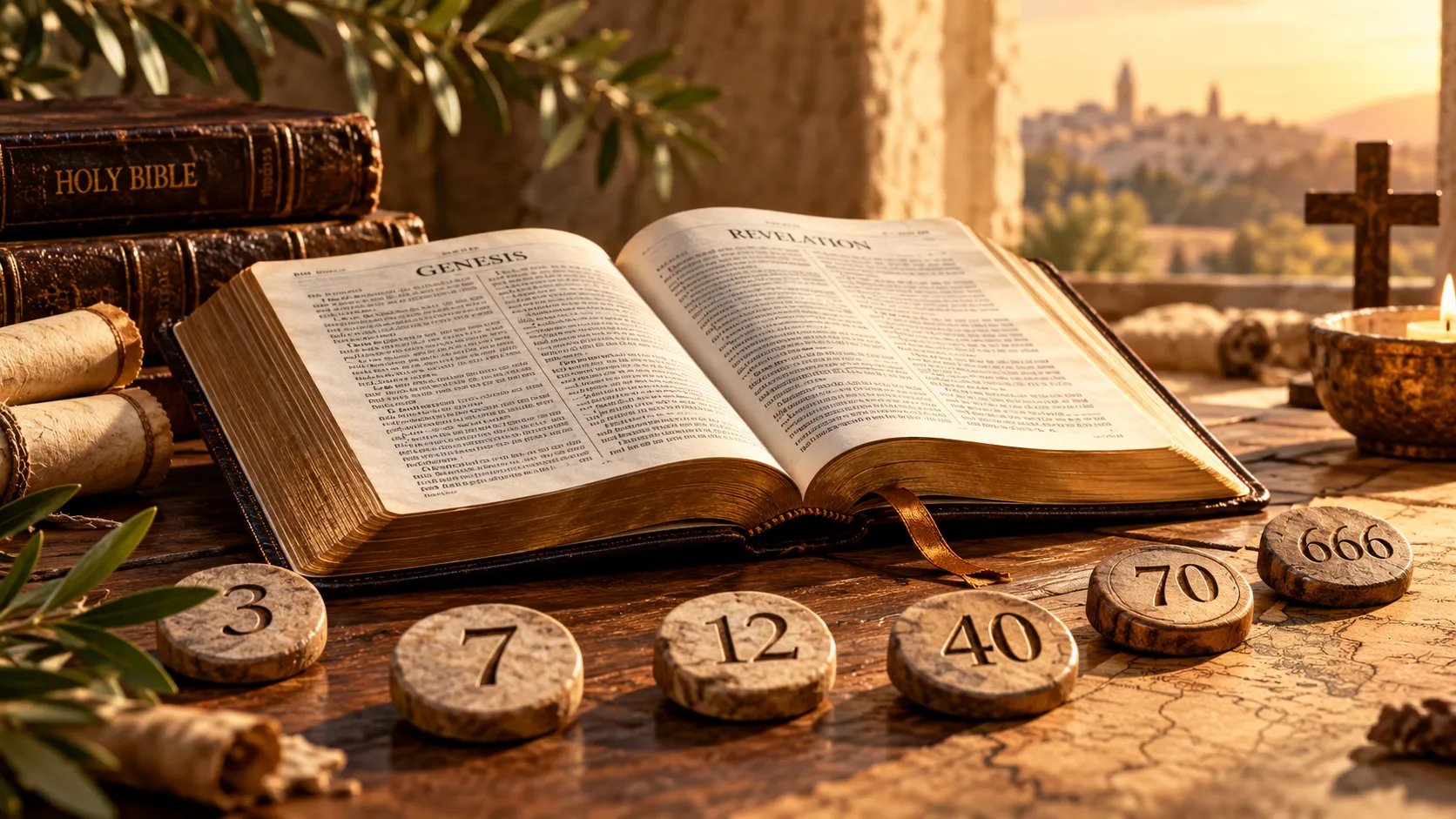
Numbers appear throughout the Bible in stories about creation, worship, prophecy, family, leadership, and the history of God’s people. Some numbers are used to count people or measure time, while others appear in patterns that readers have traditionally understood as meaningful. These patterns have made the study of biblical numbers an interesting subject for Bible readers, historians, and theologians.
Biblical numerology explores how numbers are used in Scripture and how particular numbers may carry symbolic or theological significance in certain passages. For example, the number seven is closely associated with the creation account and the Sabbath, twelve appears in the tribes of Israel and the apostles, and forty occurs in several stories involving periods of testing or preparation.
However, understanding these numbers requires more than memorizing a list of meanings. The surrounding passage, literary style, historical setting, and religious tradition all matter. In this guide, you will discover the most commonly discussed biblical numbers, examine examples from Scripture, and learn how to approach numerical symbolism without assuming that every number contains a hidden message.
What Is Biblical Numerology?
Biblical numerology is the study of numbers in the Bible and the possible symbolic meanings they carry in particular passages. It examines how numbers appear in biblical narratives, poetry, laws, genealogies, and prophetic writings.
Some numbers serve a straightforward purpose. For example, a passage may record the number of people in a group, the length of a journey, or the age of a person. In other contexts, a number may contribute to a literary pattern or represent a larger idea.
The number seven is a well-known example. In Genesis, God completes the work of creation in six days and rests on the seventh day. The seventh day is then associated with blessing and holiness. Because of this pattern, seven is often connected with completion and sacred rest in biblical interpretation.
Similarly, the twelve tribes of Israel and the twelve apostles are frequently discussed in relation to the identity and organization of God’s people.
Not every biblical number, however, has a universally accepted symbolic meaning. Some interpretations are directly supported by the structure of a passage, while others come from later religious traditions or scholarly proposals.
Biblical Number Symbolism and Modern Numerology
It is helpful to distinguish biblical number symbolism from modern numerology.
Biblical number symbolism focuses on numbers as they appear in Scripture and considers their role in the passage. Modern numerology often assigns meanings to numbers calculated from a person’s birth date, name, or other personal information.
These approaches are not identical. A biblical passage about the number forty, for example, does not automatically establish that someone who repeatedly encounters forty is receiving a personal message.
Some religious traditions also caution against divination and attempts to use numbers to predict the future. Readers should therefore distinguish studying biblical symbolism from treating numbers as a method of fortune-telling.
Why Are Numbers Important in the Bible?
Numbers help organize biblical narratives, establish patterns, and communicate ideas. Their importance depends on how they function within a particular passage.
Numbers Preserve Historical and Narrative Details
Many numbers in the Bible provide practical information. Genealogies record generations, historical accounts describe groups of people, and laws establish measurements or periods of time.
In these cases, the number may primarily serve a factual or narrative purpose. It is not necessary to assume an additional symbolic meaning every time a number appears.
Numbers Can Express Symbolic Ideas
Some biblical numerology passages use numbers in ways that invite readers to consider a broader meaning. Repeated patterns, structured lists, and recurring numbers can contribute to themes such as completeness, community, judgment, or restoration.
The creation account in Genesis is one prominent example because the seventh day is set apart after the six days of creation.
Numbers Contribute to Prophetic and Apocalyptic Writing
Books such as Daniel and Revelation contain visions, time periods, measurements, and symbolic images. Numbers in these passages can be especially challenging because apocalyptic literature often communicates through imagery and symbolism.
Different interpreters may disagree about how a particular number should be understood. A responsible reading considers the complete vision and the book’s historical and literary context rather than isolating one number from the rest of the text.
The Meaning of Number 1 in the Bible
The number one is commonly associated with unity, oneness, and uniqueness in biblical interpretation. This association is particularly relevant in passages that emphasize the unity of God or the unity of a community.
Deuteronomy 6:4 begins with the declaration known as the Shema, affirming that the Lord is one. In John 17:21, Jesus prays for his followers to be one, reflecting a theme of unity among believers.
These passages illustrate how oneness can be significant in biblical numerology theology.
However, it would be too simplistic to claim that every occurrence of the number one carries a special spiritual message. Sometimes it simply means one person, one object, or one event.
Key takeaway: Number one can express unity or uniqueness when the surrounding passage supports that interpretation.
The Meaning of Number 2 in the Bible
The number two appears in several biblical contexts involving testimony, partnership, and confirmation.
One clear example is Deuteronomy 19:15, which describes the requirement for two or three witnesses in establishing a matter. The principle appears again in the New Testament, including Matthew 18:16.
The presence of two witnesses serves a practical legal purpose within the biblical setting. It also illustrates why two can be associated with testimony or confirmation in discussions of biblical symbolism.
Pairs also appear in biblical narratives and teachings, although the meaning of each pair depends on its particular context.
Key takeaway: Number two is often discussed in relation to witnesses and confirmation, especially where biblical law or testimony is involved.
The Meaning of Number 3 in the Bible
The number three appears in many important biblical numerology narratives. In some passages, a three-day period marks a significant transition or the completion of an important stage in a story.
One example is Jonah 1:17, which describes Jonah spending three days and three nights inside a great fish. In the New Testament, Matthew 12:40 refers to Jonah’s experience in connection with Jesus’ statement about the Son of Man.
The resurrection accounts also place great importance on the third day.
Christian interpretations sometimes associate the number three with divine significance, resurrection, or completeness. Trinitarian Christians may also connect the number three with the doctrine of the Father, Son, and Holy Spirit, although the interpretation of any specific occurrence must be considered separately.
Not every appearance of three carries the same meaning. The number may simply describe the length of a period or the number of people or objects involved.
Key takeaway: Number three can be significant in narratives involving major transitions, resurrection, and important theological themes.
The Meaning of Number 4 in the Bible
The number four is sometimes associated with the created world, the earth, or universality in Christian interpretations of biblical numerology symbolism.
For example, Revelation 7:1 describes four angels standing at the four corners of the earth and holding back the four winds. The imagery conveys a comprehensive picture of the earth and the forces described in the vision.
The four directions—north, south, east, and west—also provide a familiar way to describe the whole world.
However, interpretations that assign one fixed meaning to every occurrence of four should be treated cautiously. The number’s role depends on the passage in which it appears.
Key takeaway: Number four can contribute to imagery of the earth or the four directions, particularly in symbolic and apocalyptic passages.
The Meaning of Number 6 in the Bible
The number six is important in the creation account because humanity is created on the sixth day in Genesis 1:24–31. The biblical numerology account then describes God resting on the seventh day.
Because of this sequence, some Christian interpreters associate six with human work, the created order, or a state that precedes the completion represented by seven.
These associations are interpretations drawn from biblical patterns rather than a universal rule.
The number six also appears in Revelation 13:18, where the number of the beast is identified as 666. That passage gives the number a distinct and much-debated role in Christian interpretation.
It is important not to confuse the ordinary use of six in a biblical narrative with the symbolic interpretation of 666 in Revelation.
Key takeaway: Number six is associated with the sixth day of creation and has a separate, highly significant role in the imagery of Revelation 13.
The Meaning of Number 7 in the Bible
Seven is one of the most widely recognized numbers in discussions of biblical symbolism. It is often associated with completion, fullness, and sacred rest.
The most familiar example appears in Genesis 1–2. God creates the heavens and the earth in six days and rests on the seventh. The seventh day is blessed and made holy, establishing the pattern later reflected in the Sabbath commandment.
Seven also appears repeatedly in the book of Revelation. The text describes seven churches, seven seals, seven trumpets, and seven bowls, among other groups of seven.
These repeated structures contribute to the book’s literary organization and symbolic imagery.
In Matthew 18:21–22, Peter asks Jesus about forgiving someone repeatedly. Jesus responds with wording commonly translated as “seventy-seven times” or, in some translations, “seventy times seven.” The passage emphasizes the expansive nature of forgiveness rather than providing a simple numerical limit.
Although seven often carries associations of completeness, it does not mean that every occurrence of the number must be interpreted symbolically.
Key takeaway: Number seven is strongly associated with completion, sacred rest, and repeated symbolic structures in several biblical passages.
The Meaning of Number 8 in the Bible
Some Christian numerology traditions associate eight with new beginnings, renewal, or a fresh start. These interpretations often build on biblical numerology patterns rather than an explicit statement that the number always means renewal.
One example discussed by Christian interpreters is the relationship between the seventh day of rest and the following day. Another is the practice of circumcision on the eighth day, described in Genesis 17:12 and Leviticus 12:3.
Some traditions also connect eight with resurrection and new creation.
These associations can be meaningful within a particular interpretive tradition, but they should not be presented as a universal definition that applies to every biblical appearance of eight.
Key takeaway: Number eight is sometimes interpreted as a symbol of renewal or a new beginning, although this meaning depends on the interpretive framework.
The Meaning of Number 10 in the Bible
Ten appears in several significant biblical passages, including the Ten Commandments in Exodus 20 and Deuteronomy 5.
Because of the Ten Commandments and other structured groups of ten, some interpreters associate the number with law, responsibility, order, or a complete set.
The number also appears in the parable of the ten virgins in Matthew 25:1–13. In that passage, ten is part of the story’s structure, and the central message concerns readiness and preparedness.
These examples show why the surrounding passage matters. The Ten Commandments and the parable of the ten virgins have different purposes, even though both contain the number ten.
Key takeaway: Number ten can appear in structured groups, laws, and teachings, but its meaning should be understood within each passage.
The Meaning of Number 12 in the Bible
Twelve is especially important in biblical discussions of God’s people and their organization.
In the Old Testament, the twelve tribes of Israel are associated with the sons of Jacob and the formation of Israel as a people. Genesis 49 describes Jacob’s sons, while other biblical passages refer to the tribes in different contexts.
In the New Testament, Jesus appoints twelve apostles. Matthew 10:1–4 names them, and Revelation 21:14 describes twelve foundation stones bearing the names of the twelve apostles of the Lamb.
Because twelve appears in these related contexts, Christian interpreters often associate it with the people of God, communal identity, or an established divine arrangement.
The symbolism is supported by recognizable patterns across the biblical narrative, although the precise interpretation may vary by passage and tradition.
Key takeaway: Number twelve is strongly associated with the twelve tribes of Israel and the twelve apostles.
The Meaning of Number 40 in the Bible
Forty is frequently discussed in biblical symbolism because it appears in narratives involving extended periods of testing, preparation, judgment, or transition.
Several familiar examples include:
- The flood: Genesis 7:12 describes rain falling on the earth for forty days and forty nights.
- Moses on Mount Sinai: Exodus 24:18 describes Moses remaining on the mountain for forty days and forty nights.
- Israel’s wilderness journey: Numbers 14:33–34 connects forty years in the wilderness with the Israelites’ disobedience and its consequences.
- Jesus’ temptation: Matthew 4:1–2 describes Jesus fasting for forty days and forty nights before being tempted.
Because of these repeated narratives, forty is often associated with a significant period of testing, preparation, or transition in Christian interpretation.
The exact significance depends on the story. The forty days of rain, forty years in the wilderness, and forty days of fasting are not identical events, even though they share the same number.
Key takeaway: Number forty often appears in biblical accounts of testing, preparation, judgment, or major transitions.
The Meaning of Number 70 in the Bible
Seventy appears in several biblical settings, including accounts involving elders, groups of people, and periods of time.
In Numbers 11:16–17, God instructs Moses to gather seventy elders of Israel to assist him in carrying the responsibilities of leadership. The number is part of an organized group entrusted with a particular role.
Seventy also appears in prophetic passages, including Daniel 9:24, which refers to seventy weeks. Interpretations of Daniel’s prophecy vary considerably among Jewish and Christian traditions.
Some readers associate seventy with a larger or complete group, but such conclusions should be grounded in the passage rather than assumed in advance.
Key takeaway: Number seventy appears in contexts involving leadership, groups, and prophecy, with its significance depending on the specific text.
What Does 666 Mean in the Bible?
The number 666 is one of the most widely discussed numbers in biblical interpretation. It appears in Revelation 13:18, where readers are invited to calculate the number of the beast.
The passage describes the number as the number of a person or human being, depending on the translation. Its meaning has been debated for centuries.
Some historical interpretations connect 666 with the ancient practice of assigning numerical values to letters, known as gematria. In this approach, the letters of a name can be added together according to a particular alphabetic system. Some scholars have argued that the number may point to a figure such as Nero Caesar, although this remains an interpretation rather than a universally accepted conclusion.
Other Christian traditions understand the number more broadly as a symbol of opposition to God, human power, or evil.
There is no single interpretation accepted by all Christian denominations or biblical scholars. The literary and historical context of Revelation is essential to understanding the passage.
It is also unwise to label a modern person, date, product, or event as the beast simply because someone can create a numerical calculation that equals 666.
Key takeaway: Number 666 belongs to the distinctive imagery of Revelation 13 and should be interpreted with care rather than used to make unsupported predictions.
Is Every Number in the Bible Symbolic?
No. Numbers in the Bible often serve ordinary counting, measurement, chronological, and narrative purposes. Some numbers also contribute to symbolic patterns, but this does not mean that every numerical detail contains a hidden spiritual message.
For example, a passage may describe the number of people in a group simply to communicate the size of that group. In another passage, repeated groups of seven may contribute to a deliberate literary structure.
Readers can make mistakes when they assign a symbolic meaning to a number without considering the context. They may also combine unrelated passages to create an interpretation that the original text does not support.
A careful approach begins with several questions:
- What is happening in the passage?
- Is the number part of a repeated pattern?
- Does the text itself emphasize the number?
- How does the number function in the surrounding narrative or literary structure?
- Are there established interpretations, and do they differ across traditions?
These questions help distinguish meaningful textual patterns from speculation.
Biblical Numerology vs. Gematria
Biblical numerology and gematria are related topics, but they are not interchangeable.
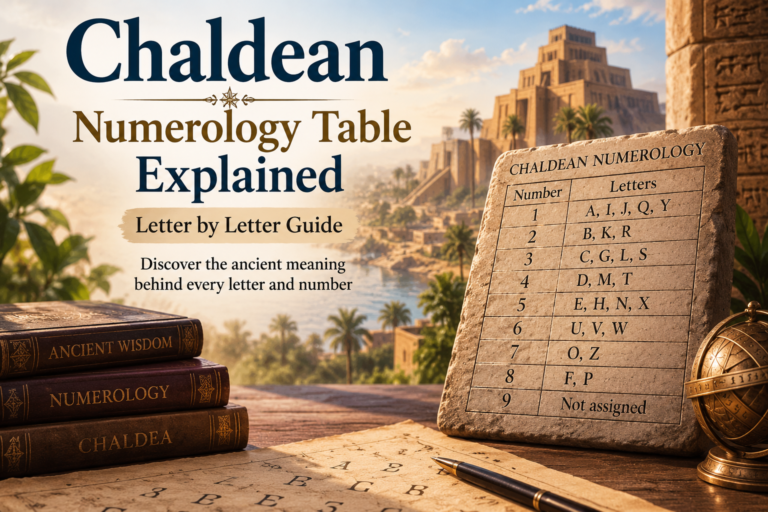
Biblical numerology is a broad term used for studying the role and possible symbolic significance of numbers in Scripture. It may include literary patterns, repeated time periods, symbolic imagery, and theological interpretations.
Gematria is a technique in which letters are assigned numerical values. The values of letters in a word or name can then be added together to produce a total.
Gematria has a history in Jewish interpretive traditions and is sometimes discussed in relation to passages such as Revelation 13:18. Because different alphabets, spellings, and calculation rules can produce different results, proposed identifications require careful historical and linguistic analysis.
A numerical match alone does not prove that a hidden code exists. The interpretation must also make sense in the passage’s historical and literary setting.
How to Study Biblical Numbers Responsibly
If you want to explore numerical patterns in the Bible, a few practical habits can help you keep your study grounded in the text.
Read the Entire Passage
Begin by reading the verses before and after the number appears. This helps you understand the story, teaching, or vision in which it occurs.
For example, the number forty in the story of Jesus’ temptation should be understood within the larger account in Matthew 4:1–11.
Compare Related Biblical Passages
If a number appears repeatedly, compare the passages carefully. Look for similarities in their literary purpose, setting, and themes.
Do not assume that the number has exactly the same meaning in every passage simply because it recurs.
Distinguish Scripture From Later Interpretation
The Bible may use a number in a particular way without explicitly defining it as a universal symbol. Later writers and religious traditions may offer interpretations based on recurring patterns.
It is useful to distinguish what the passage directly states from what an interpreter concludes.
Consult Reliable Study Resources
Bible dictionaries, academic commentaries, historical studies, and reputable theological resources can help clarify the original setting of a passage.
When interpretations differ, consider the reasons each interpretation gives rather than choosing one solely because it sounds intriguing.
Avoid Predictions Based on Numerical Patterns
Biblical number symbolism is not a reliable method for predicting personal events, identifying future dates, or determining whether someone has received a secret message.
A thoughtful study focuses on what the text communicates and how it has been understood within its religious and historical contexts.
Frequently Asked Questions About Biblical Numerology
1. What is the main purpose of biblical numerology?
Biblical numerology examines how numbers function in Scripture and whether they carry symbolic significance in particular passages. It explores recurring patterns and their possible theological or literary meanings while recognizing that many biblical numbers are used for ordinary counting and measurement.
2. What is the most significant number in the Bible?
There is no single number that every religious tradition considers the most significant. Seven is especially prominent in discussions of completion and sacred rest, twelve appears in the tribes of Israel and the apostles, and forty recurs in accounts of testing and preparation. Their significance depends on the passages being studied.
3. What does the number 7 mean in biblical numerology?
Seven is commonly associated with completion, fullness, and sacred rest. One of the clearest examples is the seventh day in Genesis 1–2. Seven also appears in repeated groups throughout Revelation. Its meaning in any particular passage should still be determined from context.
4. Why does the number 40 appear so often in the Bible?
Forty appears in several important narratives involving extended periods of time, including the flood, Moses on Mount Sinai, Israel’s wilderness journey, and Jesus’ temptation. These passages have led many interpreters to associate forty with testing, preparation, judgment, or transition.
5. Is biblical numerology the same as fortune-telling?
No. Studying numerical patterns in biblical passages is different from using numbers to predict the future. Biblical number symbolism examines the text and its context, while fortune-telling attempts to obtain information about future events. Readers should avoid treating numerical patterns as proof of personal predictions or secret messages.
Final Thoughts
Biblical numerology offers an interesting way to examine how numbers appear throughout Scripture. From the seventh day of creation to the twelve tribes of Israel, the forty-day periods in important narratives, and the number 666 in Revelation, numerical patterns can contribute to the meaning and structure of biblical passages.
Yet numbers should never be separated from the stories and teachings in which they appear. Some have clear connections to recurring biblical themes, while other proposed meanings come from later traditions or remain disputed.
The most responsible approach is to read the surrounding passage, consider its historical and literary setting, and distinguish the text itself from interpretations built upon it. This allows readers to appreciate the Bible’s numerical patterns without assuming that every number conceals a secret code.
By studying these patterns carefully, you can gain a deeper understanding of biblical narratives, the development of religious interpretations, and the many ways numbers have been understood throughout the history of Bible study.