
Karmic Debt Numbers in Numerology: 13, 14, 16 & 19
Karmic Debt Numbers in Numerology are traditionally associated with life lessons, personal responsibility, and opportunities for growth. In numerology, the numbers 13, 14, 16, and 19 are often called karmic debt numbers because some numerology traditions connect them with patterns that may require greater awareness, discipline, or change.
These numbers are not considered bad luck by everyone who practices numerology. Instead, they are often interpreted as reminders to recognize unhelpful habits, make thoughtful decisions, and develop a more balanced approach to life. Their meaning depends on where they appear in a numerology chart and which calculation method is used.
In this guide, you will learn what karmic debt numbers mean, how to calculate them, where they may appear in a numerology chart, and how each number is traditionally interpreted. You will also discover practical ways to use these ideas for self-reflection without treating numerology as a fixed prediction of your future.
What Are Karmic Debt Numbers in Numerology?
Karmic debt numbers are a concept found in some numerology traditions. They are usually identified as 13, 14, 16, and 19. Practitioners associate these numbers with particular challenges or lessons that a person may explore throughout life.
The word karma has different meanings across religious and philosophical traditions. In numerology, the phrase “karmic debt” is commonly used symbolically to describe the idea that certain patterns call for greater responsibility, balance, or personal development. Interpretations vary, and there is no scientific evidence that these numbers prove a person has a debt from a past life.
A useful way to approach this concept is to treat each number as a prompt for reflection. For example, the traditional interpretation of 13 emphasizes discipline, while 14 is associated with moderation and responsible freedom. These themes can encourage people to think about their habits and choices.
Why Are 13, 14, 16, and 19 Considered Special?
In many numerology systems, these numbers are reduced to single digits:
- 13: 1 + 3 = 4
- 14: 1 + 4 = 5
- 16: 1 + 6 = 7
- 19: 1 + 9 = 10, then 1 + 0 = 1
The reduced numbers—4, 5, 7, and 1—also have their own traditional meanings. However, numerologists who use the karmic debt concept interpret the original two-digit number as significant rather than considering only its final digit.
For instance, 13/4 is often discussed in terms of discipline and consistent effort, while 14/5 is associated with freedom and self-control. The original number and the reduced number are therefore considered together in this approach.
The Four Karmic Debt Numbers and Their Meanings

Each karmic debt number has a different traditional interpretation. The following sections explain the common themes associated with each number and offer practical questions for personal reflection.
Karmic Debt Number 13/4: Discipline and Hard Work
The number 13 is reduced to 4, a number commonly associated with structure, stability, patience, and practical effort in numerology.
In karmic debt interpretations, 13/4 is often linked with the importance of developing discipline and completing tasks consistently. It may symbolize the challenge of moving away from shortcuts, procrastination, or scattered effort and toward steady progress.
Traditional Meaning of Number 13
The central lesson associated with 13/4 is that meaningful results often require patience and sustained work. Instead of expecting immediate success, a person can focus on building reliable habits and improving one step at a time.
Common themes include:
- Developing a consistent routine.
- Taking responsibility for unfinished work.
- Breaking large goals into manageable steps.
- Learning practical skills through repetition.
- Balancing ambition with patience.
For example, someone who repeatedly starts projects but struggles to finish them might use the symbolism of 13/4 as a reminder to set realistic deadlines, reduce distractions, and follow a simple daily plan.
How to Apply the Lesson of 13/4
Choose one important goal and divide it into small, measurable tasks. Complete those tasks regularly rather than waiting for motivation or a perfect opportunity.
The number does not mean success must come through suffering. Its traditional message is about the value of effort, organization, and persistence.
Reflection question: Where would greater consistency help me make progress?
Karmic Debt Number 14/5: Freedom and Self-Control
The number 14 reduces to 5, which is traditionally connected with freedom, movement, curiosity, adaptability, and new experiences.
In karmic debt numerology, 14/5 is commonly associated with the challenge of balancing personal freedom with responsibility. It may serve as a symbolic reminder that choices have consequences and that flexibility works best when supported by healthy boundaries.
Traditional Meaning of Number 14
The lesson of 14/5 is often described as learning to enjoy freedom without allowing impulsive behavior to take control.
Its themes may include:
- Practicing moderation in everyday habits.
- Thinking carefully before making major decisions.
- Managing time and money responsibly.
- Creating healthy boundaries.
- Staying committed to important responsibilities while exploring new opportunities.
For example, someone who enjoys variety but frequently abandons long-term plans might reflect on whether they are making room for new experiences without neglecting existing commitments.
This interpretation does not mean that people associated with 14 are naturally irresponsible. It simply highlights a theme that some numerology traditions connect with the number.
How to Apply the Lesson of 14/5
Before making an important decision, consider both its immediate appeal and its long-term effects. A simple budget, realistic schedule, or regular review of personal goals can help turn the idea of balance into everyday practice.
Reflection question: Am I using my freedom in a way that supports the future I want?
Karmic Debt Number 16/7: Humility and Inner Growth
The number 16 reduces to 7, which is commonly associated with introspection, analysis, learning, and spiritual exploration.
Some numerology traditions interpret 16/7 as a symbol of humility, self-awareness, and reconsidering beliefs that may no longer serve a person. Its traditional meaning often focuses on looking beneath the surface rather than relying entirely on appearances or external approval.
Traditional Meaning of Number 16
The lesson of 16/7 is sometimes described as learning to recognize personal blind spots and remain open to change.
Common themes include:
- Developing honest self-awareness.
- Questioning assumptions and unrealistic expectations.
- Learning from difficult experiences without defining yourself by them.
- Valuing inner development alongside external achievements.
- Building relationships on mutual respect rather than idealized expectations.
For example, a person who places too much importance on status or approval might use the symbolism of 16/7 to examine what genuinely matters to them. They may discover that personal values, meaningful relationships, and emotional maturity deserve as much attention as outward success.
Some interpretations of 16 involve sudden change or the collapse of illusions. This is a symbolic interpretation, not a reliable prediction that a person will experience loss, heartbreak, or another specific event.
How to Apply the Lesson of 16/7
Make time for reflection, journaling, learning, or quiet activities that help you understand your choices. When something does not go as planned, consider what can reasonably be learned from the experience without blaming yourself for every outcome.
Reflection question: Which belief or expectation might I need to reconsider?
Karmic Debt Number 19/1: Independence and Cooperation
The number 19 reduces to 1 because 1 + 9 = 10 and 1 + 0 = 1. In numerology, 1 is traditionally associated with independence, initiative, leadership, and new beginnings.
In karmic debt interpretations, 19/1 is often connected with learning to balance self-reliance and personal ambition with cooperation and consideration for others.
Traditional Meaning of Number 19
The lesson of 19/1 is sometimes described as developing independence without becoming isolated or dismissing the needs of other people.
Its common themes include:
- Taking responsibility for personal decisions.
- Developing confidence without arrogance.
- Asking for help when it is appropriate.
- Respecting other people’s contributions.
- Using leadership to support shared goals.
For example, someone who prefers to handle every task alone might reflect on whether accepting support could improve their work and relationships. Independence can be a strength, but collaboration can make that strength more effective.
The number 19 does not mean a person is destined to struggle alone. Its traditional symbolism encourages a healthier relationship between personal initiative and mutual support.
How to Apply the Lesson of 19/1
Practice making decisions confidently while remaining willing to listen to feedback. In teamwork, acknowledge other people’s efforts and remember that accepting help does not make you less capable.
Reflection question: How can I maintain my independence while building stronger connections with others?
How to Find Karmic Debt Numbers in Your Numerology Chart
Karmic debt numbers are not identified in exactly the same way by every numerology practitioner. Some methods examine the numbers used in a Life Path calculation, while others also look at name-based numbers, such as the Expression Number.
The original two-digit numbers are usually considered important in traditions that recognize karmic debt. A final single-digit result alone does not automatically establish that someone has a karmic debt number.
1. Calculate Your Life Path Number
Your Life Path Number is commonly calculated using your full birth date. One approach adds the digits of the day, month, and year separately, then combines the results. Different numerology schools may use slightly different reduction rules, especially when master numbers are involved.
Consider this example:
Birth date: September 13, 1992
- Month: September = 9
- Day: 13
- Year: 1 + 9 + 9 + 2 = 21, then 2 + 1 = 3
- Add the results: 9 + 13 + 3 = 25
- Reduce the total: 2 + 5 = 7
The final Life Path Number is 7. However, the original day of birth is 13, one of the numbers traditionally associated with karmic debt. In systems that examine the birth day, this may be interpreted as a 13/4 influence alongside the Life Path Number 7.
This is an illustrative example of one numerology approach, not a scientific assessment or a universally accepted rule.
2. Look at the Original Numbers, Not Only the Final Digit
Suppose two calculations both reduce to 4. One might begin with 13, while another might begin with 22 and follow a different calculation path. Some numerologists interpret these original numbers differently, even if a reduction produces the same final digit.
That is why practitioners who use karmic debt numbers often preserve the original two-digit total when interpreting a chart.
3. Explore Other Core Numbers Carefully
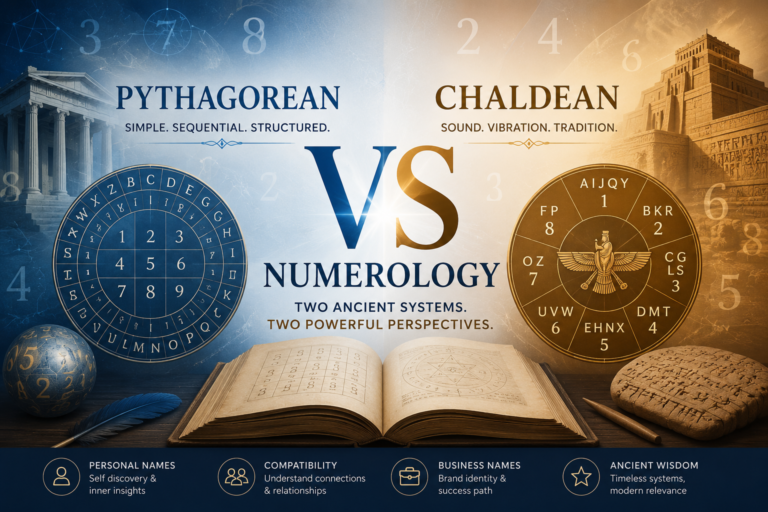
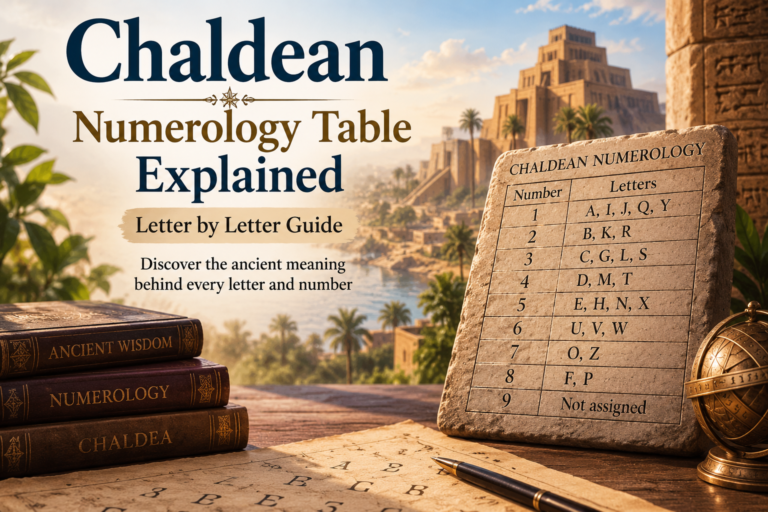
Some numerology systems also consider name-based numbers, including the Expression Number and Soul Urge Number. These calculations use a person’s name according to a letter-number chart.
Whether a karmic debt number is recognized in these positions depends on the tradition being followed. Before interpreting a result, identify the calculation method and avoid mixing rules from different systems.
Karmic Debt Numbers vs. Life Path Numbers
Karmic debt numbers and Life Path Numbers are related in some numerology practices, but they are not the same concept.
A Life Path Number is usually presented as a broad symbolic description of a person’s life themes. A karmic debt number adds a more specific interpretation involving responsibility, personal lessons, or habits that may need attention.
For example, a person may have Life Path Number 7 and a birth day of 13. In a tradition that recognizes the 13/4 karmic debt interpretation, the chart might be read as combining the introspective themes of 7 with the discipline-oriented themes of 13/4.
| Feature | Life Path Number | Karmic Debt Number |
|---|---|---|
| Common examples | 1–9, sometimes 11, 22, or 33 | 13, 14, 16, and 19 |
| Main interpretation | Broad life themes and tendencies | Symbolic lessons and personal responsibility |
| Calculation | Usually based on birth date | Depends on where the number appears in a calculation |
| Meaning | Varies by number and tradition | Commonly linked with discipline, balance, humility, or independence |
These are traditional numerology interpretations, and different practitioners may use different calculation and interpretation methods.
Are Karmic Debt Numbers Bad or Unlucky?
No. Karmic debt numbers are not universally considered bad or unlucky. Even within numerology, many practitioners interpret them as opportunities to reflect, learn, and make more conscious choices.
The word debt can sound frightening, but it does not need to be understood as a punishment or a prediction of hardship. In symbolic interpretations, it points toward an area where awareness and responsibility may be especially valuable.
For example:
- 13/4 may encourage discipline and steady effort.
- 14/5 may encourage moderation and thoughtful freedom.
- 16/7 may encourage humility and self-understanding.
- 19/1 may encourage independence balanced with cooperation.
These themes can be useful reflection prompts regardless of whether someone believes in numerology. You do not need to accept every interpretation or assume that a number determines your personality, relationships, finances, or future.
How to Work With Karmic Debt Number Meanings in Everyday Life
If a karmic debt number appears in your chart, you can use its traditional symbolism as a starting point for practical self-reflection. The aim is not to search for problems simply because a number appears, but to identify habits and choices that genuinely matter to you.
Turn the Meaning Into a Practical Goal
Start with the theme traditionally associated with your number. Then connect it to a realistic action.
- For 13/4, create a simple weekly routine and finish one task at a time.
- For 14/5, set boundaries around spending, time, or other habits that you want to manage more thoughtfully.
- For 16/7, spend time reviewing your assumptions and learning from experience.
- For 19/1, practice asking for support and recognizing the contributions of others.
Choose actions that fit your actual circumstances rather than following a number’s interpretation blindly.
Focus on Growth Instead of Fear
Numerology should not make you feel that you are being punished for past actions or that difficult experiences are unavoidable. Real-life challenges can have many causes, and a number cannot establish why a particular event happened.
If an interpretation feels negative, look for a constructive question instead. Rather than asking, “What bad thing will happen to me?” ask, “What skill or habit would help me handle my current situation better?”
Review Your Progress Honestly
After a few weeks, review whether the action you chose has been useful. You might notice that a more consistent routine helps you complete tasks, or that setting boundaries improves your use of time.
Keep what works and adjust what does not. This practical approach allows you to explore numerology without giving it control over important decisions.
Common Misunderstandings About Karmic Debt Numbers
A few misconceptions can make karmic debt numerology seem more alarming or certain than it is.
Misunderstanding 1: A karmic debt number guarantees suffering.
There is no reliable evidence that a birth date or numerology calculation predicts hardship. The traditional interpretations are symbolic, not guarantees.
Misunderstanding 2: Everyone with the same number has the same personality.
Numerology practitioners may interpret a number as a shared theme, but real personalities are shaped by many factors, including experiences, relationships, environment, and personal choices.
Misunderstanding 3: A karmic debt number proves something about a past life.
Some spiritual traditions connect karma with past actions or lives, but a numerology calculation cannot verify a person’s past-life history.
Misunderstanding 4: You must change your life because of your number.
A number should not replace independent judgment. Use any interpretation as a reflection tool, and make decisions based on your circumstances, reliable information, and values.
Frequently Asked Questions About Karmic Debt Numbers
1. What are the four karmic debt numbers in numerology?
The four numbers most commonly identified in karmic debt numerology are 13, 14, 16, and 19. They are traditionally associated with lessons involving discipline, moderation, humility, and independence. Interpretations vary between numerology systems.
2. How do I know if I have a karmic debt number?
You can calculate your core numerology numbers using your birth date and, in some systems, your name. Check whether 13, 14, 16, or 19 appears in a position recognized by the method you are following. A final single-digit result alone does not necessarily indicate a karmic debt number.
3. Is karmic debt number 13 unlucky?
Number 13 is considered unlucky in some cultural traditions, but that is not the only interpretation. In karmic debt numerology, 13/4 is often associated with discipline, persistence, organization, and steady effort. It does not guarantee bad luck.
4. Can karmic debt numbers affect relationships or career choices?
Some numerology practitioners use these numbers to reflect on relationship habits, work patterns, and personal goals. However, there is no scientific evidence that karmic debt numbers determine relationship compatibility or career success. Important choices are best made using real-world information and personal judgment.
5. Can a karmic debt number change over time?
Your birth date does not change, so a number calculated from it generally remains the same. However, the way you interpret its symbolism and the habits you develop can change over time. Numerology is best used as an optional tool for reflection rather than a fixed description of your future.
Final Thoughts
Karmic debt numbers in numerology offer a symbolic way to explore four recurring themes: discipline through 13/4, balance through 14/5, humility through 16/7, and independence balanced with cooperation through 19/1.
If one of these numbers appears in your chart, you do not need to fear it or assume it predicts a difficult future. Instead, consider whether its traditional meaning raises a useful question about your habits, responsibilities, relationships, or personal goals.
Numerology can be an interesting framework for self-reflection, but it cannot prove that a person owes a spiritual debt or predict what will happen next. Your decisions, actions, circumstances, and willingness to learn remain important parts of your life.