
Numerology and Personality Traits: Understanding Your Numbers
Have you ever wondered why some people enjoy taking the lead while others prefer listening, observing, or helping behind the scenes? Personality is shaped by many influences, including life experiences, environment, relationships, and individual choices. In numerology, numbers offer another traditional way to reflect on these differences.
Numerology and personality traits are often discussed together because numerology assigns symbolic meanings to numbers derived from a person’s birth date and name. Practitioners use these numbers to explore themes such as independence, creativity, responsibility, communication, and personal growth.
In this guide, you will discover how numerology interprets personality, how to calculate your Life Path Number, what each number from 1 to 9 traditionally represents, and how other core numbers add different perspectives to a numerology chart. You will also learn how to use these interpretations as prompts for self-reflection without treating them as fixed labels.
How Does Numerology Interpret Personality?
Numerology is a traditional belief system that assigns symbolic significance to numbers. In popular numerology and Personality Traits systems, a person’s birth date and name are used to calculate several numbers, each associated with a particular theme or set of characteristics.
For example, Life Path Numbers are commonly interpreted in relation to broad personality themes and life experiences. Other numbers are associated with natural abilities, inner motivations, or the way a person presents themselves to others.
A numerology reading may describe number 1 through themes of independence, number 2 through cooperation, or number 5 through adaptability. These descriptions provide a symbolic framework for thinking about personal qualities rather than a scientifically established personality assessment.
It is also important to understand that people are more complex than a single number. Two people with the same Life Path Number can have different preferences, habits, strengths, and challenges. Their experiences and decisions play an important role in shaping who they become.
The most balanced way to explore numerology is to consider whether a traditional interpretation offers a useful question for reflection, rather than assuming that every description must apply to you.
How to Calculate Your Life Path Number
The Life Path Number is one of the best-known numbers in numerology and Personality Traits. It is calculated from a person’s full date of birth and is traditionally associated with broad themes of personal development.
One commonly used method reduces the month, day, and year separately before combining the results. Some numerology and Personality Traits traditions handle Master Numbers differently, so calculation methods can vary.
A step-by-step example
Imagine that a person was born on July 14, 1996.
Step 1: Reduce the birth month.
July is the seventh month, so its value is 7.
Step 2: Reduce the birth day.
The day is 14:
1 + 4 = 5
Step 3: Reduce the birth year.
Add the digits of 1996:
1 + 9 + 9 + 6 = 25
Then reduce the result:
2 + 5 = 7
Step 4: Add the three results.
7 + 5 + 7 = 19
Reduce the total:
1 + 9 = 10
Then:
1 + 0 = 1
Using this calculation method, the person’s Life Path Number is 1.
In traditional numerology and Personality Traits, number 1 is associated with initiative, independence, and leadership. This does not mean that everyone with this number will have the same personality. It simply introduces the symbolic interpretation connected with the result.
If you use an online calculator, follow its stated method consistently, especially when the calculation involves 11, 22, or 33.
Numerology Personality Traits for Numbers 1–9
Each single-digit number has a different symbolic meaning in popular numerology and Personality Traits. The following interpretations cover common strengths, possible challenges, and a question you can use for self-reflection.
Remember that these descriptions are traditional associations, not proven measurements of personality.

Number 1: The Independent Initiator
Number 1 is traditionally associated with independence, ambition, originality, and initiative. Its symbolism focuses on starting new projects, making decisions, and developing confidence in one’s own abilities.
Commonly associated strengths:
- Willingness to take initiative
- Independent thinking
- Goal-oriented behavior
- Confidence in making decisions
Possible challenges: Independence can sometimes turn into impatience or reluctance to accept help. A person who strongly values personal control may need to make room for collaboration and other people’s perspectives.
Reflection question: Can you take the lead while still listening carefully to the people around you?
In numerology and Personality Traits, number 1 encourages reflection on how independence can be balanced with cooperation.
Number 2: The Cooperative Peacemaker
Number 2 is often linked with sensitivity, diplomacy, cooperation, and harmony. Its traditional symbolism emphasizes relationships and the ability to recognize different perspectives.
Commonly associated strengths:
- Patience and consideration
- Collaborative thinking
- Attention to relationships
- A preference for peaceful solutions
Possible challenges: A strong desire for harmony may make disagreement uncomfortable. In some interpretations, number 2 also represents the challenge of putting other people’s needs ahead of personal boundaries.
Reflection question: Can you maintain harmony without ignoring your own needs?
Number 2 offers a symbolic reminder that cooperation works best when both people can express themselves honestly.
Number 3: The Creative Communicator
Number 3 is commonly associated with creativity, communication, enthusiasm, and self-expression. It is often connected with storytelling, artistic interests, and the enjoyment of sharing ideas.
Commonly associated strengths:
- Expressive communication
- Creative thinking
- Social engagement
- An ability to approach ideas imaginatively
Possible challenges: Creativity and enthusiasm can sometimes be accompanied by scattered attention or unfinished projects. The traditional lesson of number 3 is to give ideas enough structure to turn them into something meaningful.
Reflection question: How can you turn your creative ideas into consistent action?
In numerology and Personality Traits, number 3 represents the relationship between expression, imagination, and follow-through.
Number 4: The Practical Organizer
Number 4 is traditionally associated with stability, structure, patience, and reliability. Its symbolism focuses on building strong foundations through steady effort.
Commonly associated strengths:
- Organized thinking
- Persistence and discipline
- Attention to practical details
- A preference for dependable routines
Possible challenges: A preference for stability may sometimes become resistance to change. Someone who values clear plans may feel uncomfortable when circumstances require experimentation or flexibility.
Reflection question: Can you stay organized while remaining open to a better approach?
Number 4 encourages a balance between careful planning and the willingness to adapt when needed.
Number 5: The Curious Explorer
Number 5 is associated with freedom, variety, adaptability, and curiosity. In traditional interpretations, it represents exploration and the desire to experience different possibilities.
Commonly associated strengths:
- Adaptability in changing situations
- Curiosity about new ideas
- Willingness to explore alternatives
- Interest in varied experiences
Possible challenges: Too many interests can make it difficult to maintain focus. A preference for freedom may also make long-term routines feel restrictive.
Reflection question: How can you enjoy new experiences while staying committed to important goals?
Number 5 offers a symbolic reminder that flexibility can be valuable when paired with thoughtful decisions.
Number 6: The Caring Supporter
Number 6 is commonly linked with compassion, responsibility, family, and nurturing relationships. Its symbolism centers on care, belonging, and the desire to support others.
Commonly associated strengths:
- Concern for other people’s well-being
- A sense of responsibility
- Appreciation for supportive relationships
- Interest in creating a comfortable environment
Possible challenges: Caring for others can become exhausting when personal boundaries are neglected. A person who feels responsible for everyone may struggle to allow others to solve their own problems.
Reflection question: Can you support others while making time for your own needs?
In numerology and Personality Traits, number 6 highlights the importance of balancing generosity with self-care and healthy boundaries.
Number 7: The Thoughtful Investigator
Number 7 is traditionally associated with analysis, reflection, curiosity, and the search for understanding. It is often connected with learning, research, and time spent thinking independently.
Commonly associated strengths:
- Analytical thinking
- Interest in learning
- Careful observation
- A preference for meaningful questions
Possible challenges: Too much analysis can make decisions difficult, while a preference for solitude may sometimes limit communication with others.
Reflection question: Can you make space for reflection without becoming disconnected from people around you?
Number 7 invites consideration of how curiosity and independent thinking can be combined with openness and connection.
Number 8: The Goal-Oriented Strategist
Number 8 is often associated with ambition, organization, responsibility, and achievement. Its symbolism focuses on practical results, leadership, and the management of resources.
Commonly associated strengths:
- Goal setting and planning
- Persistence toward objectives
- Strategic thinking
- Willingness to accept responsibility
Possible challenges: A strong focus on achievement may lead to overwork or an excessive emphasis on measurable results. Traditional interpretations of number 8 often encourage a balance between ambition and personal well-being.
Reflection question: Can you pursue meaningful goals without allowing success to define your entire identity?
Number 8 provides a symbolic opportunity to reflect on how achievement, responsibility, and balance can work together.
Number 9: The Compassionate Idealist
Number 9 is traditionally associated with compassion, generosity, idealism, and a broader concern for others. Its symbolism often emphasizes understanding different perspectives and contributing to something meaningful.
Commonly associated strengths:
- Empathy and consideration
- Interest in helping others
- Broad-minded thinking
- Appreciation for meaningful causes
Possible challenges: Idealism may sometimes lead to unrealistic expectations, disappointment, or difficulty setting boundaries. Helping others can become draining when personal needs are repeatedly ignored.
Reflection question: How can you contribute to others while protecting your own time and energy?
Number 9 encourages reflection on generosity, realistic expectations, and the value of mutual support.
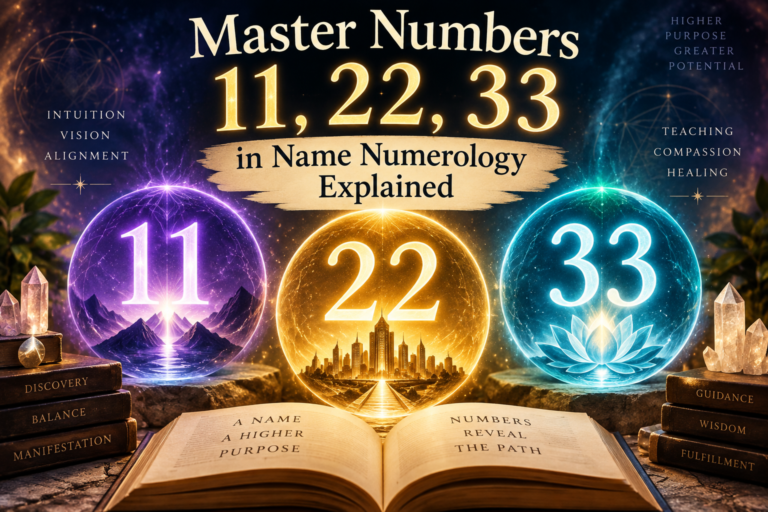
What Are Master Numbers 11, 22, and 33?
Some numerology and Personality Traits give special significance to the numbers 11, 22, and 33. These are commonly called Master Numbers and may be retained rather than reduced to single digits in certain calculations.
Their interpretations vary between numerology systems, but common associations include the following.
Number 11: Inspiration and Intuition
Number 11 is often connected with inspiration, sensitivity, intuition, and idealism. Its traditional symbolism emphasizes awareness and the ability to consider possibilities beyond immediate circumstances.
A useful reflection is whether sensitivity and inspiration help you understand situations while remaining grounded in practical information.
Number 22: Vision and Practical Building
Number 22 is commonly associated with organization, long-term planning, and turning ideas into practical results. It combines symbolic themes of vision with the discipline required to develop a plan.
A useful reflection is whether your larger ambitions are supported by realistic steps, consistent effort, and patience.
Number 33: Compassion and Service
In traditions that recognize 33 as a Master Number, it is often associated with compassion, teaching, responsibility, and service.
A useful reflection is whether your desire to help others is balanced with realistic expectations and healthy personal boundaries.
Not all numerologists treat Master Numbers in the same way, and their interpretations should not be regarded as proof of special abilities or a superior personality.
How Name Numbers Add Another Perspective
Your Life Path Number is based on your date of birth, but popular numerology and Personality Traits systems also use the letters of a person’s name to calculate other numbers.
These numbers are traditionally interpreted as different perspectives on personality and motivation.
Expression Number
The Expression Number, sometimes called the Destiny Number, is calculated using the letters of the full name according to a chosen numerology system.
It is traditionally associated with personal abilities, talents, and ways of expressing oneself. In a reflective reading, you might use it to consider the skills you enjoy developing and the activities that feel natural to you.
Soul Urge Number
The Soul Urge Number is commonly calculated from the vowels in a person’s name. Some systems call it the Heart’s Desire Number.
Its traditional interpretation focuses on inner motivations, personal values, and the things a person finds meaningful.
For reflection, consider what motivates you when external expectations are removed. Is it creativity, stability, connection, learning, or something else?
Personality Number
The Personality Number is generally calculated from the consonants in a person’s name. Numerology and Personality Traits associate it with outward presentation and the impression someone may give to others.
It can be used as a prompt to think about how you communicate, how you approach new social situations, and whether others see you in the way you intend.
These name-based numbers are interpreted differently across systems. They can provide additional symbolic themes, but they are not validated psychological tests and cannot establish someone’s true character.
Using Numerology for Personal Growth
Numerology and Personality Traits can be more useful as a starting point for reflection than as a rigid description of who you are. Instead of deciding that a number defines your personality, use its traditional themes to explore your experiences.
Identify patterns in your behavior
If a number is associated with independence, ask yourself when you enjoy working alone and when collaboration helps you succeed. If it is associated with care, consider whether you support others without neglecting your own needs.
Focus on experiences you can actually observe rather than assuming that a description applies automatically.
Recognize strengths without overlooking challenges
Every personality has areas of strength and areas that may need attention. Confidence can be useful, but it can also become overconfidence. Care can build strong relationships, but it may become overwhelming without boundaries.
A balanced numerology reading considers both sides of a symbolic trait instead of presenting every number as entirely positive or negative.
Avoid putting yourself into a fixed category
You may relate to parts of several number descriptions. That is normal. People respond differently to different situations, and their behavior can change as they learn, develop new skills, and experience new circumstances.
You do not need to make every part of a numerology and Personality Traits reading fit your life.
Turn reflection into practical action
Choose one quality you want to develop and identify a small step you can take. For example, if you want to become more organized, create a simple weekly plan. If communication is an area you want to improve, practice listening carefully and expressing your needs clearly.
These actions can be useful regardless of whether you believe in numerology.
Can Numerology Accurately Describe Your Personality?
Numerology offers traditional interpretations of numbers, but there is no strong scientific evidence that a number derived from a birth date or name can reliably determine a person’s personality.
Some descriptions may feel surprisingly accurate because they discuss common human experiences, such as wanting independence, seeking meaningful relationships, or struggling with uncertainty. People may also notice the statements that fit them while overlooking those that do not.
For this reason, numerology should be treated as a belief-based or reflective practice rather than an objective personality assessment.
If you want a research-based understanding of your personality, established psychological tools and assessments may provide a more appropriate starting point. Even those tools have limitations and should be interpreted in context.
You can still enjoy exploring numerology while making room for your own experiences, critical thinking, and individual choices.
Frequently Asked Questions
1. What does numerology say about personality traits?
Numerology assigns symbolic meanings to numbers calculated from a person’s birth date and name. These interpretations commonly explore themes such as independence, creativity, cooperation, responsibility, and ambition. They are traditional associations rather than scientifically established personality measurements.
2. Which number is considered the strongest in numerology?
There is no universally accepted strongest or best number. Different numerology traditions emphasize different qualities, and numbers are interpreted according to their context. No number has been scientifically shown to make someone more successful, intelligent, or capable than another person.
3. How do I find my personality number in numerology?
In a commonly used system, the Personality Number is calculated from the consonants in a person’s full name. Each letter is assigned a numerical value, the values are added together, and the result is reduced according to the system’s rules. Methods can vary, so check which chart your calculator uses.
4. Are Life Path Numbers and Personality Numbers the same?
No. A Life Path Number is calculated from the date of birth and is traditionally associated with broad life themes. A Personality Number is generally calculated from the consonants in a person’s name and is interpreted in relation to outward presentation. They represent different concepts within numerology.
5. Is numerology scientifically proven to reveal personality?
No. There is no reliable scientific evidence that numerology can accurately determine personality traits from a person’s name or birth date. It may be meaningful as a cultural tradition or personal reflection exercise, but it should not replace evidence-based psychological assessment.
Final Thoughts
Numerology and personality traits are connected through a traditional system that gives symbolic meanings to numbers derived from birth dates and names. From the independence associated with number 1 to the compassion associated with number 9, each number offers a different theme to explore.
The value of these interpretations depends on how you use them. Rather than allowing a number to define your identity, consider whether its themes help you ask thoughtful questions about your habits, relationships, motivations, and personal goals.
You are more than a Life Path Number or a name-based calculation. Your experiences, decisions, values, and willingness to grow all contribute to the person you become.
Explore numerology with curiosity, keep an open mind, and use what you find meaningful as an invitation to understand yourself more thoughtfully.