Master Numbers 11, 22, 33 in Name Numerology Explained
To understand Master Numbers 11, 22, 33, it helps to first understand the standard reduction rule they’re an exception to. In most numerology calculations, whether working from a name’s expression number or a birth date’s life path number, a total is added together digit by digit until only one number remains. A total of 47, for example, becomes 4 + 7 = 11 — and this is exactly where the exception kicks in. Rather than continuing to reduce 11 down to 1 + 1 = 2, most numerology traditions stop at this point, treating 11 as a complete number in its own right rather than a stepping stone toward a smaller digit.
The same logic applies to 22 and 33. Where a typical compound number like 19 or 27 continues reducing until it reaches a single digit, these three specific totals are set apart, carried through to a final reading without further reduction. This is the defining feature behind Master Numbers 11, 22, 33: they occupy a space between the standard single-digit numbers and the double-digit compound numbers that normally get reduced away.
Why These Three Numbers Specifically
The reasoning behind treating 11, 22, and 33 as exceptions traces back through numerology’s long history, with most traditions pointing to the repeating-digit pattern itself as significant. Each of these three numbers is built from a doubled single digit — 1 and 1, 2 and 2, 3 and 3 — which numerologists interpret as an amplification of that base number’s qualities rather than a dilution of them through further addition. This shared doubling pattern is exactly what separates Master Numbers 11, 22, 33 from every other double-digit total in the system. Under this reasoning, 11 isn’t simply “on its way to becoming 2.” It’s read as a heightened, more intense expression of the number 1’s core themes, carried by the doubling itself.
This is part of why Master Numbers 11, 22, 33 are consistently described using stronger, more demanding language than their reduced counterparts. Where number 2 is associated with cooperation and diplomacy, number 11 is associated with a much more intense form of intuition and insight — the same underlying territory, approached with far more pressure and potential attached to it.
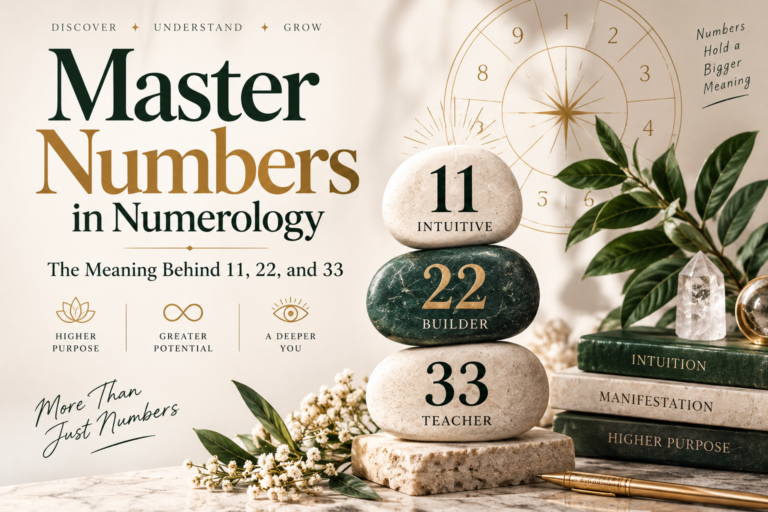
Master Number 11: The Intuitive
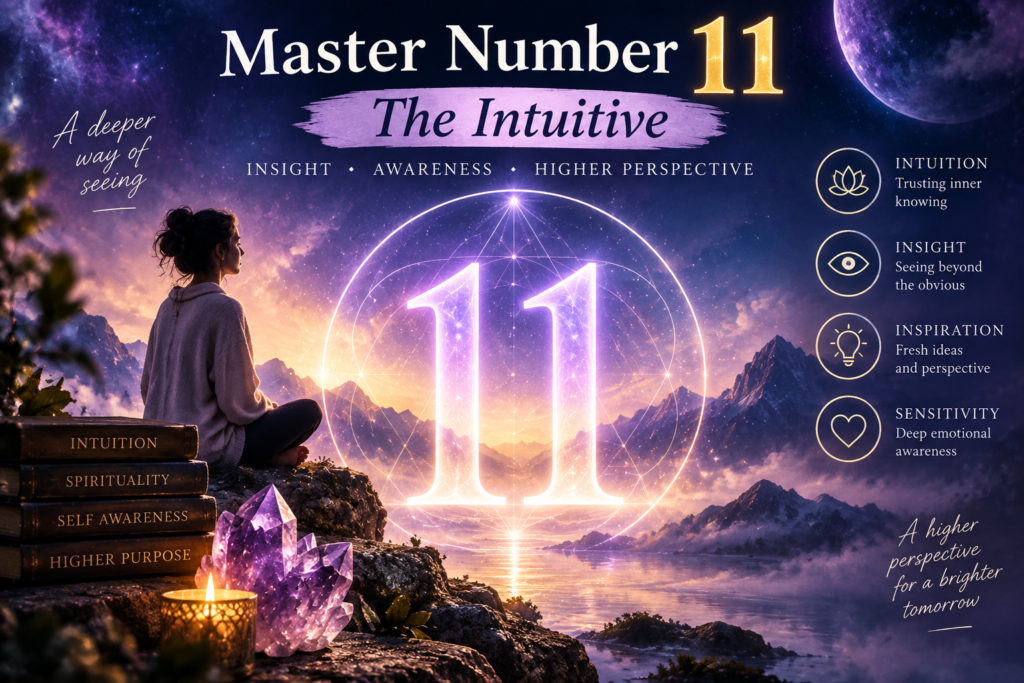
Number 11 is the first of the three, and it’s most commonly associated with heightened intuition, insight, and a sensitivity to things other people tend to overlook. People connected to this number, whether through their expression number or their life path number, are frequently described as perceptive to an unusual degree — picking up on emotional undercurrents in a room, sensing outcomes before they’re confirmed, or arriving at conclusions that seem to skip several logical steps that others need spelled out.
This heightened sensitivity comes with a corresponding weight. Numerologists commonly note that people connected to 11 often experience more internal tension than those connected to a standard number, since the same intuitive gift that allows for deep insight can also produce anxiety, overthinking, or a persistent sense of being “different” from people around them. This tension is a recurring theme across nearly every description of this particular master number — a genuine gift paired with a genuine challenge, rather than a purely favorable reading.
Master Number 22: The Builder
Number 22 carries a reputation distinct from the other two, frequently referred to as the master builder number. Where 11 is associated with insight and perception, 22 is associated with turning large, ambitious ideas into tangible, lasting results. This number combines the practical, structured qualities of number 4 (2 + 2 reduces to 4 under standard rules) with the doubled intensity that defines all three master numbers, producing a profile numerologists describe as capable of large-scale, real-world achievement.
People connected to this number are often described as natural organizers with an unusually broad vision — comfortable thinking in terms of long-term projects, institutions, or structures that will outlast any single individual involved. This is also considered the most demanding of the three master numbers 11 in terms of practical responsibility, since the scale of ambition associated with it requires sustained discipline to actually realize, rather than remaining a large idea that never gets built.
Master Number 33: The Teacher
Number 33 is the least common of the three to appear in a standard name or birth date calculation, and it’s typically described as the most spiritually weighted of the group, often referred to as the master teacher number. It combines the nurturing, service-oriented qualities of number 6 (3 + 3 reduces to 6 under standard rules) with an intensity aimed specifically at guiding, teaching, or uplifting others on a broad scale.
Numerologists frequently describe people connected to this number as carrying a strong pull toward selfless service, sometimes to the point of neglecting their own needs in favor of supporting others. Because it’s the rarest of the three to appear, many numerology resources treat its full meaning as something that only becomes clear later in a person’s life, once enough life experience has accumulated for the number’s teaching-oriented themes to become active and visible.
How Master Numbers Show Up in Name Numerology Specifically
While Master Numbers 11, 22, 33 are most commonly discussed in the context of life path numbers calculated from a birth date, they appear just as readily in name-based calculations. When adding up the letter values in a name’s expression number, soul urge number, or personality number, the running total can land on 11, 22, or 33 at any stage — either as the final result after all letters are added, or earlier, as an intermediate compound number that would normally continue reducing under standard rules.
A name like “Diana,” for example, using Pythagorean values, breaks down as D=4, I=9, A=1, N=5, A=1, totaling 20 — a standard compound number that reduces normally to 2. A name like “Wendell,” by contrast, adds up to a total that happens to land directly on 22 before any further reduction is needed, meaning the calculation stops there under most traditional reduction rules rather than continuing on to 2 + 2 = 4. Examples like this show exactly how Master Numbers 11, 22, 33 can surface unexpectedly within an otherwise ordinary name calculation.
This is precisely why checking for master numbers 11 during a name calculation matters — skipping this check and reducing straight through to a single digit regardless of the intermediate total produces an incomplete reading, missing a result some numerologists consider the most significant part of the entire calculation.
Chaldean vs. Pythagorean Treatment of Master Numbers
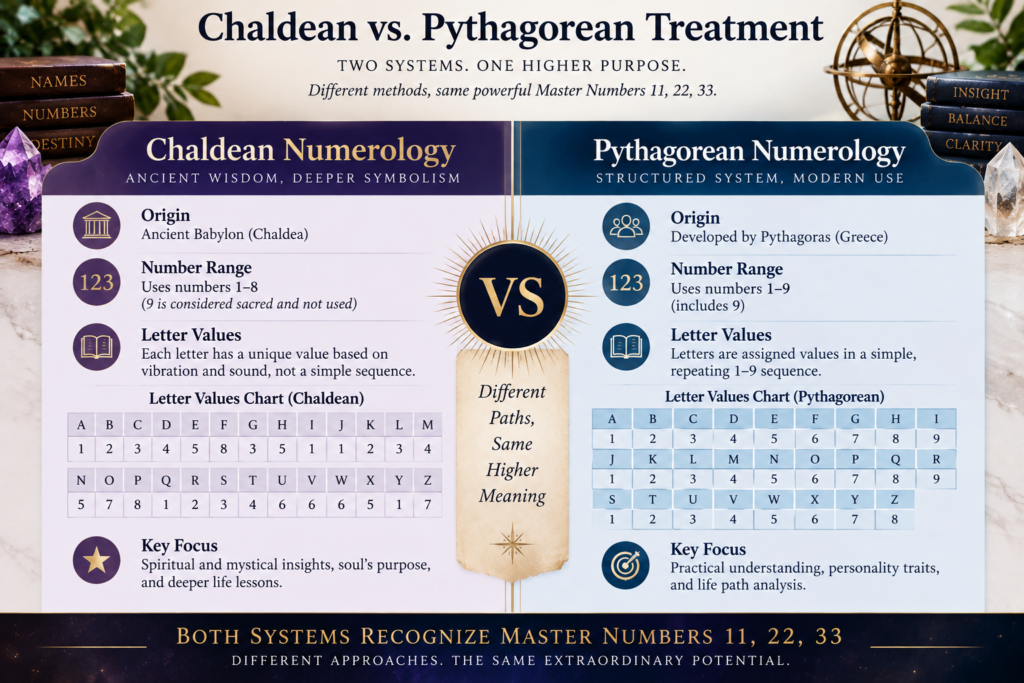
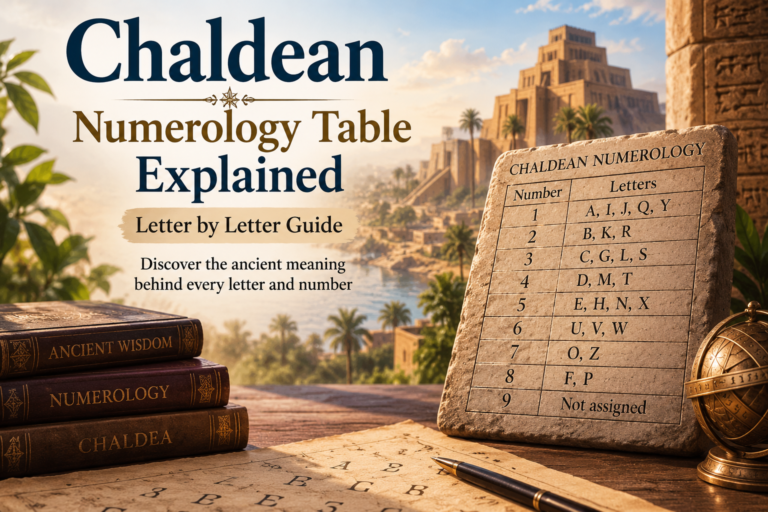
Both major numerology systems recognize Master Numbers 11, 22, 33, though the letter values that produce them differ, since Chaldean numerology and Pythagorean numerology assign different numeric values to several letters of the alphabet. A name that lands on a master number under one system might reduce to a standard single digit under the other, depending entirely on which letter chart is applied during the calculation.
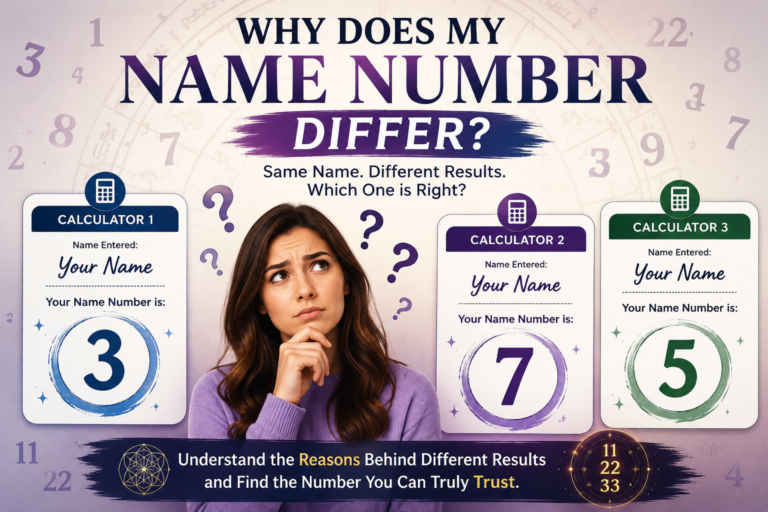
This is worth checking carefully before comparing name numerology results across two different calculators or resources. If one tool reports a master number and another doesn’t for the exact same name, the difference usually comes down to which letter system each is using, rather than a disagreement about how master numbers themselves should be handled once identified.
Do Master Numbers Always Get Left Unreduced?
Not every numerology practitioner follows the same convention here, which is worth knowing before treating any single source as the final word on Master Numbers 11, 22, 33. Most traditional resources leave 11, 22, and 33 unreduced whenever they appear as a final total. Some practitioners, however, apply master number status only to a final result and continue reducing intermediate compound numbers normally, while others extend master number recognition to any point in the calculation where one of these totals appears, even mid-calculation.
Because of this inconsistency, a thorough numerology reading should explain which convention it’s following rather than simply presenting a result without context. If you’re comparing your own name’s calculation against a resource that identifies a master number, it’s worth confirming whether that resource applies the same reduction rule consistently throughout, or only at the final step.
Are Master Numbers Rare?
Compared to standard single-digit results, yes — noticeably so. Since a name or birth date has to land on one of only three specific totals (11, 22, or 33) rather than any of nine possible single digits, the odds of any given calculation producing a master number are inherently lower. Among the three, 11 is generally considered the most common to appear, followed by 22, with 33 being the rarest by a fairly wide margin, largely because it requires a higher total before the doubling pattern lines up correctly.
This relative rarity is part of why Master Numbers 11, 22, 33 carry the reputation they do — a result that doesn’t show up often tends to be treated as more noteworthy than one that appears in a large share of routine calculations.
Common Mistakes People Make With Master Numbers
A handful of recurring errors show up when people first start checking their own name or birth date for Master Numbers 11, 22, 33.
- Reducing straight through to a single digit without checking intermediate totals. This skips the point in the calculation where a master number might have appeared before further reduction.
- Treating every double-digit repeating number as a master number. Numbers like 44, 55, 66, 77, 88, and 99 are not traditionally included in most numerology systems’ master number category, which is generally limited specifically to 11, 22, and 33.
- Assuming a master number guarantees an exceptional life outcome. Most numerology resources frame these numbers as carrying more potential and more challenge simultaneously, not a straightforward, automatic advantage over a standard single-digit result.
- Mixing Chaldean and Pythagorean letter values while checking for a master number, which can produce an inconsistent or inaccurate reading of whether one is actually present.
What to Do If You’re Not Sure Whether You Have One
If you’ve calculated a name or birth date and you’re uncertain whether a master number is present, the safest approach is to write out the full calculation step by step rather than relying on memory or a quick mental estimate. Add the letter values or date digits together, note the total before any reduction, and check that intermediate total specifically against 11, 22, and 33 before reducing further. If the intermediate total matches one of these three numbers, stop there — that’s the reading to use. If it doesn’t, continue reducing as normal until a single digit remains.
It’s also worth double-checking your work using a second method, such as a calculator built specifically for this purpose, since a small arithmetic error during a manual calculation can easily cause a master number to be missed or incorrectly identified. Given how much weight these three numbers carry in a complete numerology reading, a few extra minutes spent confirming the calculation is generally considered worthwhile.
How Master Numbers Fit Into a Complete Numerology Reading
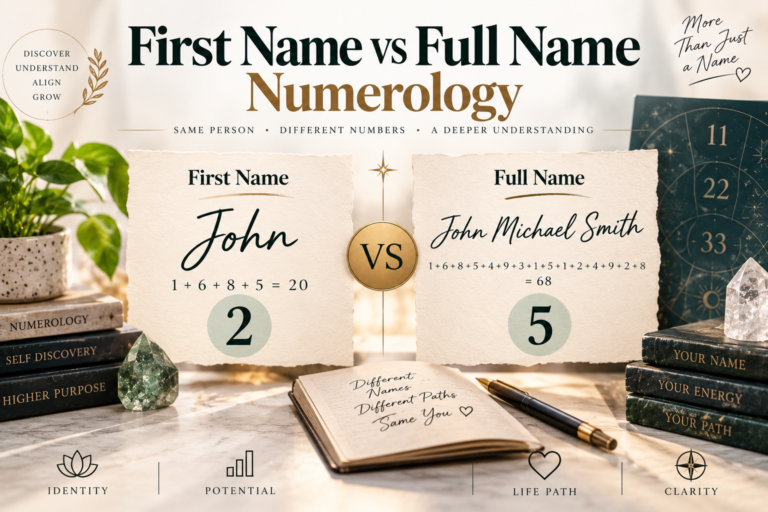
A full numerology profile typically involves several separate calculations — a life path number from the birth date, an expression number from the full name, a soul urge number from the name’s vowels, and a personality number from the name’s consonants. Master numbers can technically appear in any of these individually, which means a complete reading involves checking each calculation separately rather than assuming that finding one master number in a life path number rules out the possibility of another appearing elsewhere in the same person’s profile.
Most experienced practitioners treat this as a standard part of a thorough reading rather than an optional extra step, since overlooking a master number in any one of these calculations means working from an incomplete picture of what the full numerology profile actually contains.
Frequently Asked Questions
Are master numbers only relevant to life path numbers, or can they show up in a name too? They can appear in either calculation. A name’s expression number, soul urge number, or personality number can land on 11, 22, or 33 just as readily as a life path number calculated from a birth date.
What’s the difference between master number 11 and regular number 2?
Number 2 and master number 11 share underlying themes — cooperation, sensitivity, partnership — but 11 is read as a significantly amplified version of those themes, carrying more intensity, more intuitive capacity, and generally more internal tension than the standard reduced number.
Is having a master number always considered a positive thing?
Not exclusively. Most numerology resources describe master numbers as carrying heightened potential alongside heightened difficulty, rather than framing them as a purely favorable result compared to a standard single-digit number.
Should master numbers be reduced further for simplicity?
Traditional numerology practice generally advises against this. Reducing 11, 22, or 33 further removes the specific meaning associated with the doubled digit, replacing a more nuanced reading with a simpler one that most practitioners consider incomplete.
Which master number is considered the most powerful?
There’s no single agreed-upon ranking, though 33 is frequently described as carrying the most weight due to its rarity and its association with large-scale service to others, while 22 is often cited for its association with tangible, real-world achievement at scale.
Can a name calculation produce more than one master number at different stages?
It’s possible, though uncommon. A full name calculation involves several separate totals — the expression number from the full name, the soul urge number from vowels only, and the personality number from consonants only — and each of these runs through its own independent addition and reduction process. It’s entirely possible for one of these three calculations to land on a master number while the other two reduce to standard single digits, since each draws from a different subset of the name’s letters.
Do practitioners agree on how to interpret someone with more than one master number present?
There’s no single standardized approach here across different numerology traditions. Some practitioners treat multiple master numbers appearing across a person’s full reading — life path, expression, soul urge, and personality numbers combined — as evidence of an unusually demanding personal path, requiring more conscious effort to manage the heightened qualities each master number represents. Others simply note each master number’s meaning independently without layering additional significance onto having more than one present at once.
Final Thought
Master Numbers 11, 22, 33 represent the clearest exception to numerology’s standard reduction rule, set apart because of the doubled-digit pattern each one carries and the amplified meaning that pattern is believed to produce. Whether encountered in a birth-date-based life path number or a name-based expression number, recognizing when one of these three totals appears — and understanding that it’s meant to be read on its own terms rather than reduced away — is central to getting a complete, accurate numerology reading rather than an incomplete one.