Pythagorean vs Chaldean Numerology Calculator: Key Differences Explained
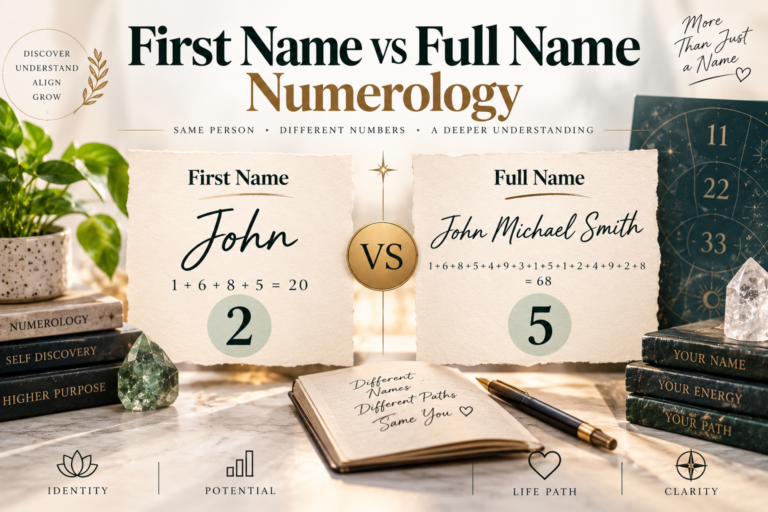
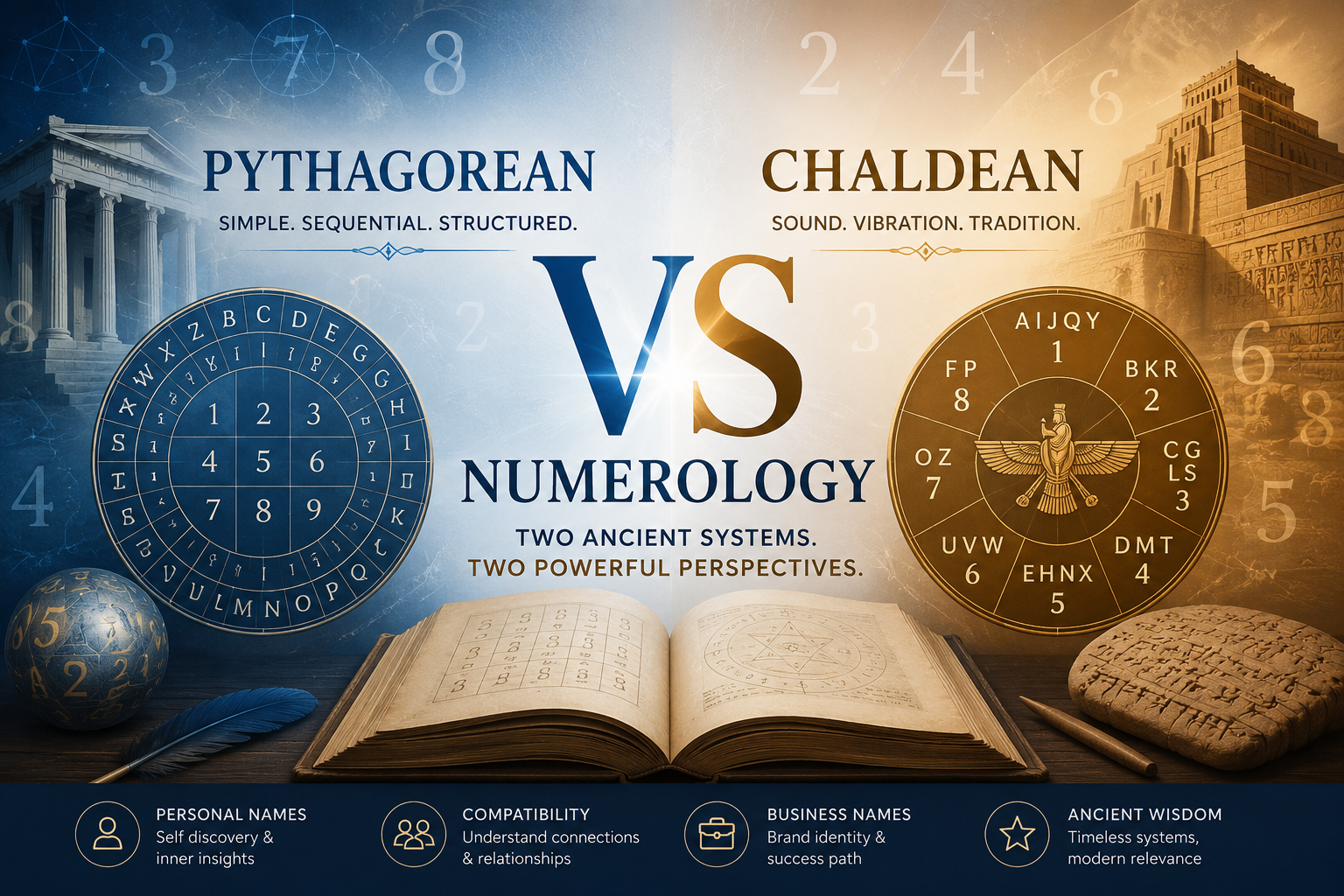
If you’ve ever run the same name through two different name numerology calculators and gotten two different numbers, you’re not imagining things — and the calculator isn’t broken. You’ve simply run into a Pythagorean vs Chaldean mismatch: the two oldest systems in the field, pulling in different directions. Neither one is “wrong.” They were built with different goals in mind, and once you understand what each system is actually measuring, the mismatch stops being confusing and starts being useful.
Pythagorean vs Chaldean: Why the Same Name Produces Two Different Numbers
Every name numerology calculator does the same three things: assign a number to each letter, add those numbers up, and reduce the total to a single digit (or a master number). The confusion doesn’t come from the math — it comes from step one, the letter chart. In the debate of Pythagorean vs Chaldean numerology, these two systems simply don’t agree on which number belongs to which letter, so the same name walks two separate paths and lands on two separate results.
Think of it less like a calculator error and more like converting temperature in Celsius versus Fahrenheit. Both are measuring something real. They’re just using different scales.
The Pythagorean System: Built for Simplicity
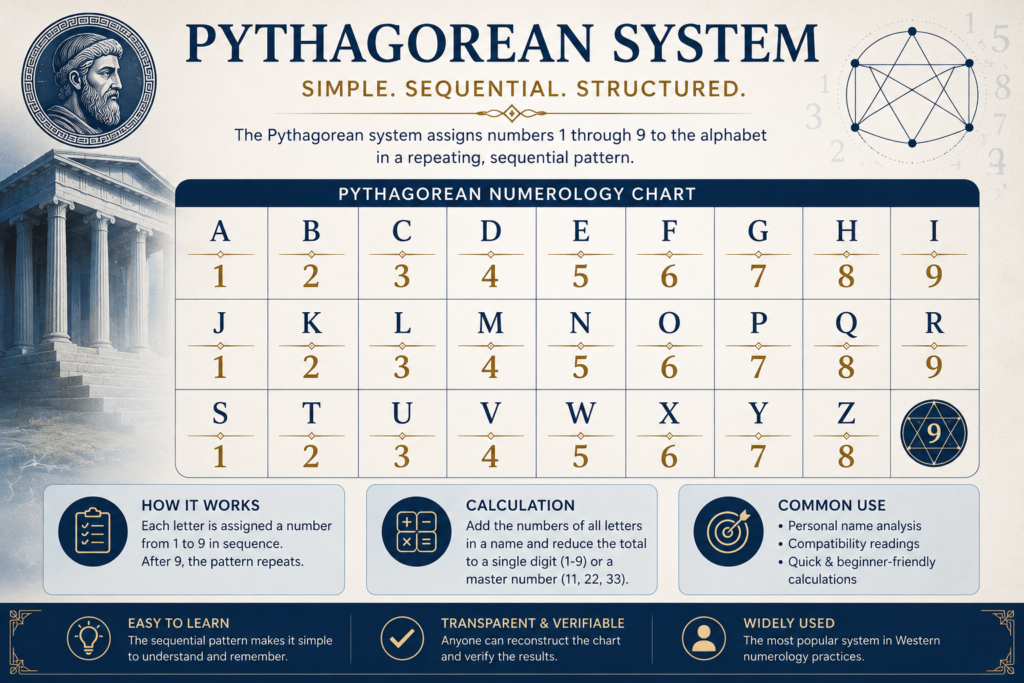
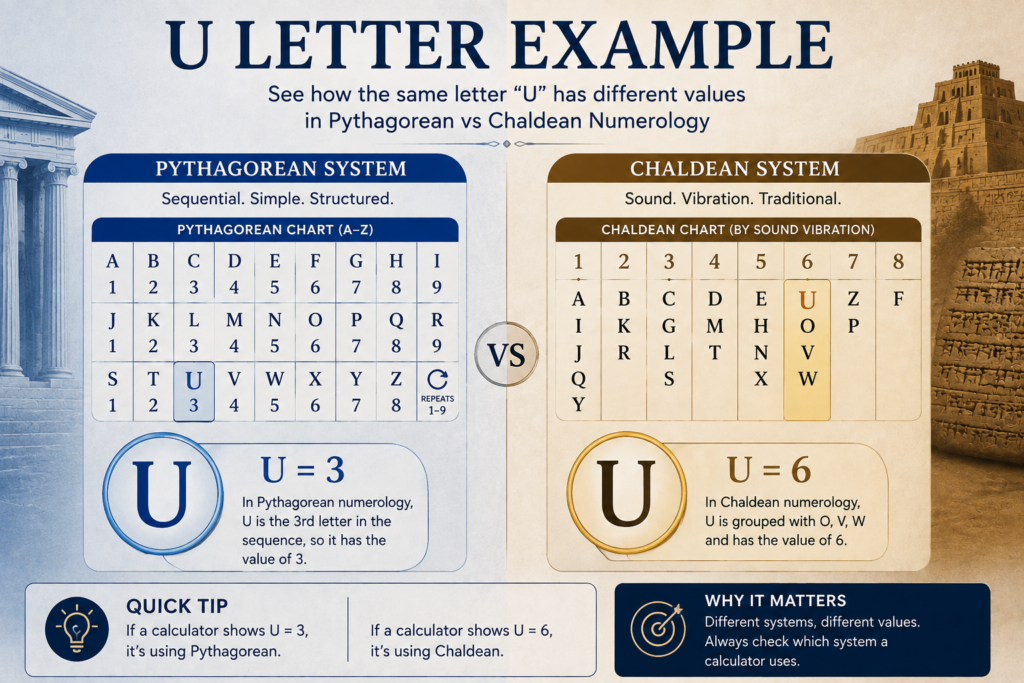
The Pythagorean method, attributed to the Greek mathematician Pythagoras, assigns numbers 1 through 9 to the alphabet in strict, repeating sequence — A is 1, B is 2, and so on, cycling back to 1 after I. There’s no memorization required beyond that single pattern, which is exactly why it became the default system for most Western numerology calculators, apps, and books.
What it’s typically used for:
- Personal name analysis (first name, full birth name)
- Compatibility readings between two people’s names
- Quick, beginner-friendly calculations
Why people prefer it: It’s transparent. Anyone can reconstruct the chart from memory in ten seconds, which makes the result feel verifiable rather than mysterious. When people first search Chaldean vs Pythagorean comparisons, this simplicity is usually why they lean toward the Pythagorean chart first.
The Chaldean System: Built on Sound, Not Sequence
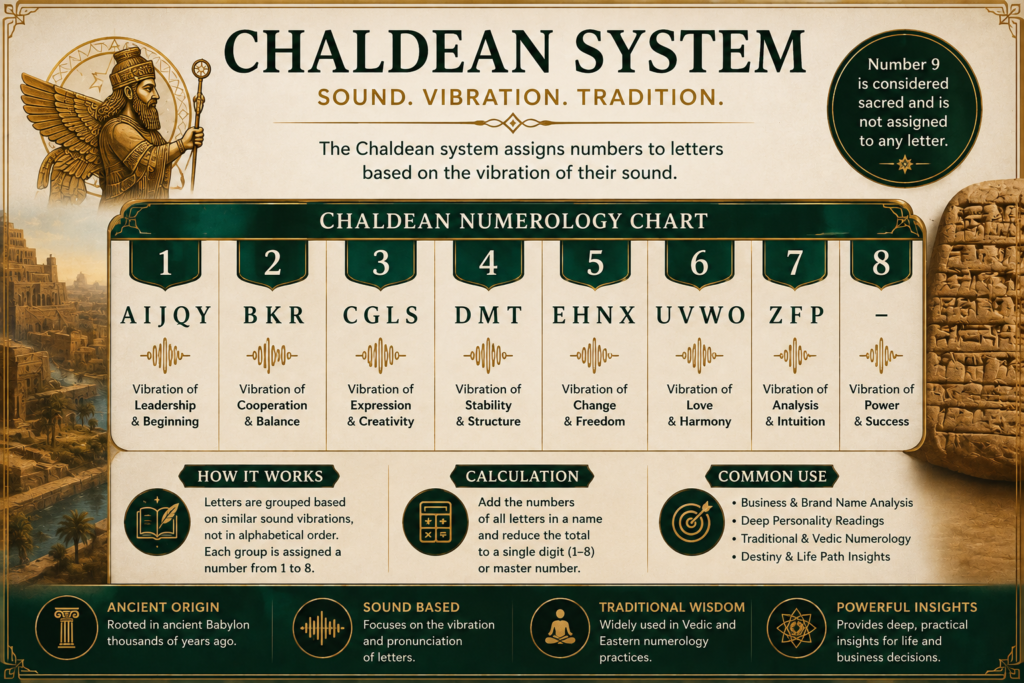
Chaldean numerology is older, tracing back to ancient Babylon, and it works on a completely different premise: letters are grouped by the vibration of their sound, not their position in the alphabet. That’s why the Chaldean chart looks uneven at first glance — several letters share the same number, and the number 9 is left out of the chart entirely, treated as too sacred or too powerful to assign to any letter.
What it’s typically used for:
- Business and brand name analysis
- Deeper personality and destiny readings
- Traditional Vedic-influenced numerology practices, especially across South Asia
Why practitioners prefer it: Because it’s based on sound rather than fixed sequence, many traditional numerologists consider it more attuned to how a name is actually spoken and experienced, not just how it’s spelled. This is one of the core distinctions that comes up in almost every Pythagorean vs Chaldean discussion online.
Pythagorean vs Chaldean: Side-by-Side Comparison
| Factor | Pythagorean | Chaldean |
|---|---|---|
| Origin | Ancient Greece | Ancient Babylon |
| Letter assignment | Sequential (A–I = 1–9, repeats) | Grouped by sound vibration |
| Number 9 | Included like any other number | Excluded from the letter chart, treated as sacred |
| Common use case | Personal names, quick reads | Business names, traditional/Vedic readings |
| Learning curve | Very easy to memorize | Requires a reference chart |
Laid out this way, the Pythagorean table makes the practical differences easier to spot than reading paragraphs of explanation.
So Which One Should You Use?
There isn’t a universally “correct” answer — but there is a practically useful one depending on what you’re trying to do:
- Naming a baby or checking your own name for reflection? Pythagorean is the more common starting point simply because it’s easier to cross-check and widely documented.
- Naming a business, brand, or product? Many traditional numerologists lean Chaldean here, since it was historically applied to trade names and commercial ventures.
- Comparing results across multiple sites? Check which system each calculator uses before comparing numbers. A “5” from a Pythagorean tool and a “5” from a Chaldean tool are not describing the same calculation — they just happen to share a digit.
The most important habit in any Chaldean vs Pythagorean decision isn’t picking a “winner” between the two systems. It’s staying consistent. If you’re tracking your name number over time, or comparing it against a partner’s or your business’s, use the same system throughout. Mixing results from different systems is where most of the confusion online actually comes from — not the systems themselves.
A Quick Way to Check Which System a Calculator Uses
Not every website tells you outright. A fast way to check: look up the letter U. In Pythagorean numerology, U is usually 3. In Chaldean numerology, U is grouped with O, V, and W under the number 6. This single-letter check is often the fastest way to settle a Chaldean vs Pythagorean question without digging through a site’s methodology page — if a calculator gives U a different value than your Pythagorean chart, it’s very likely running Chaldean logic, even if the page doesn’t label it.
Frequently Asked Questions
Is one system more accurate than the other?
Neither system is “more accurate” in a measurable sense — numerology isn’t a predictive science. In the Pythagorean vs Chaldean comparison, they’re two interpretive traditions with different historical roots, and accuracy in this context means internal consistency, not objective correctness.
Can I calculate my name using both systems?
Yes, and many people do exactly that to compare perspectives. Just keep the results labeled separately rather than averaging or combining them.
Which system do most modern apps default to?
Most Western-built calculators default to Pythagorean because of its simplicity, while sites rooted in Vedic or South Asian numerology traditions more often default to Chaldean.
Does the system change my life path number too?
No — life path numbers are calculated from your birth date, not your name, so they’re unaffected by which letter-numbering system you use.
Final Thought
The “right” numerology system is the one that matches what you’re actually using it for — and the one you use consistently. Understanding Pythagorean vs Chaldean methodology means once you know whether a calculator is running Pythagorean or Chaldean logic, the numbers stop feeling arbitrary and start feeling like what they actually are: two different lenses on the same name.