Common Numerology Myths Debunked: What’s Actually True
Numerology has been practiced in one form or another for thousands of years, and along the way, a lot of ideas about it have taken hold that don’t actually reflect what the practice claims or how it works. Some of these ideas come from confusion with astrology. Others come from oversimplified explanations passed along without much scrutiny. This Numerology Myths Debunked guide walks through the misconceptions that show up most often, explaining where each one came from and what the more accurate picture actually looks like.
Myth 1: Every Numerology System Uses the Same Letter Values
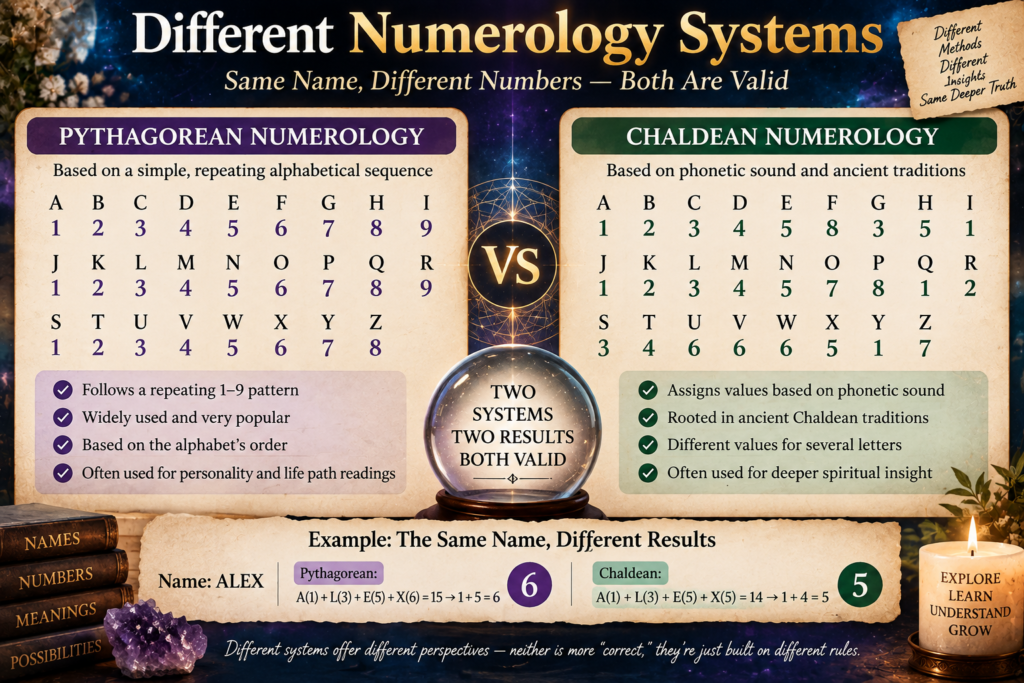
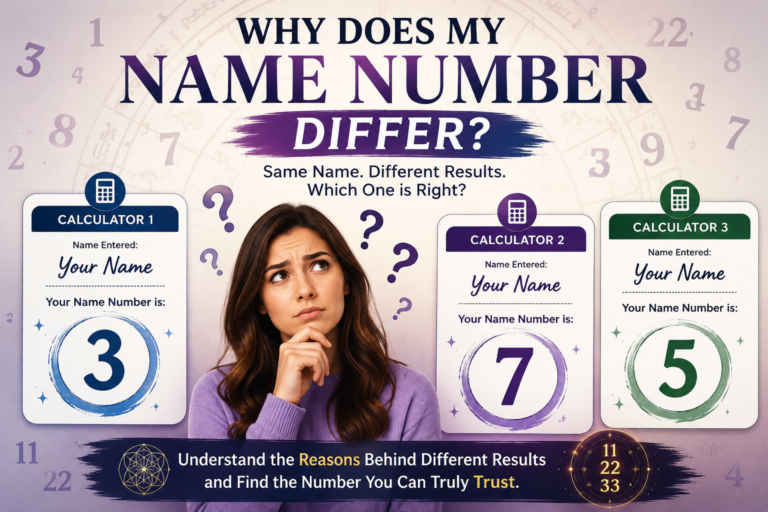
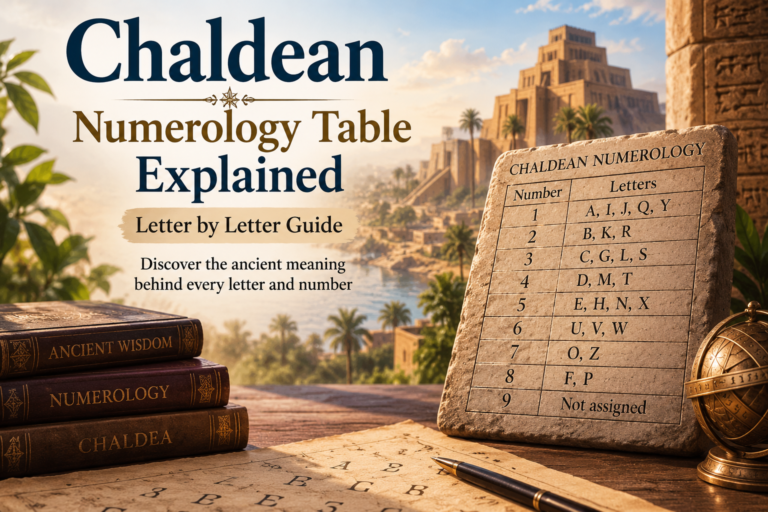
One of the most common misunderstandings is assuming that a name’s number is fixed and universal, calculated the same way no matter which resource or calculator you use. In reality, Pythagorean numerology and Chaldean numerology assign different values to several letters of the alphabet, since Pythagorean numerology follows a simple repeating alphabetical sequence while Chaldean numerology groups letters according to phonetic sound. The same name can produce two entirely different expression numbers depending on which system is used, and neither result is more “correct” than the other — they’re just built on different underlying rules.
This particular point belongs near the top of any Numerology Myths Debunked discussion because it explains a huge share of the confusion people run into when comparing results across different sites. A calculator isn’t broken if it disagrees with another one; it’s very likely just running a different system.
Myth 2: The Number 13 Is Always Unlucky
Cultural superstition around the number 13 runs deep in many Western societies, but this reputation doesn’t actually come from numerology itself — it’s largely a separate cultural and religious tradition that predates modern numerology practice and has been folded into it informally over time. Within most structured numerology systems, 13 is treated as a compound number that reduces to 4 (1 + 3 = 4), a number traditionally associated with stability, structure, and discipline rather than misfortune.
Some numerology resources do flag 13 as a “karmic debt number,” suggesting it carries a lesson tied to past patterns that need addressing, but this is a specific and fairly narrow interpretation within certain traditions, not a universal reading of the number as simply cursed. Lumping general cultural superstition together with actual numerology practice is exactly the kind of conflation this Numerology Myths Debunked breakdown aims to separate out clearly.
Myth 3: Master Numbers Are Always a Sign of Exceptional Destiny
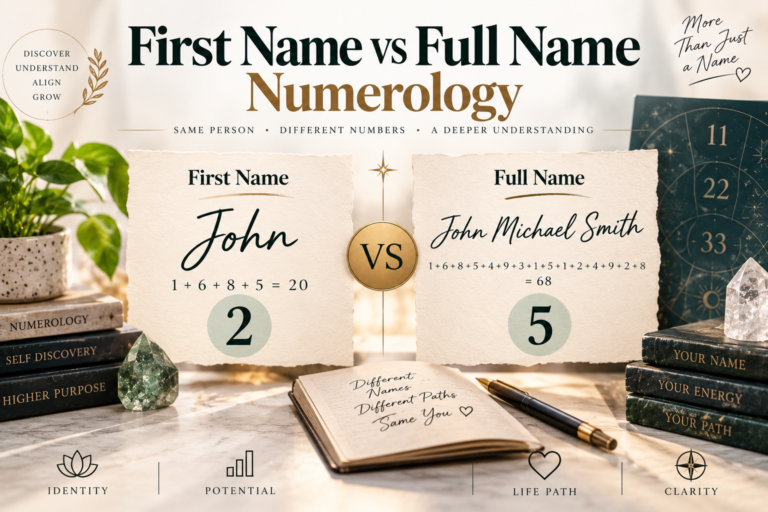
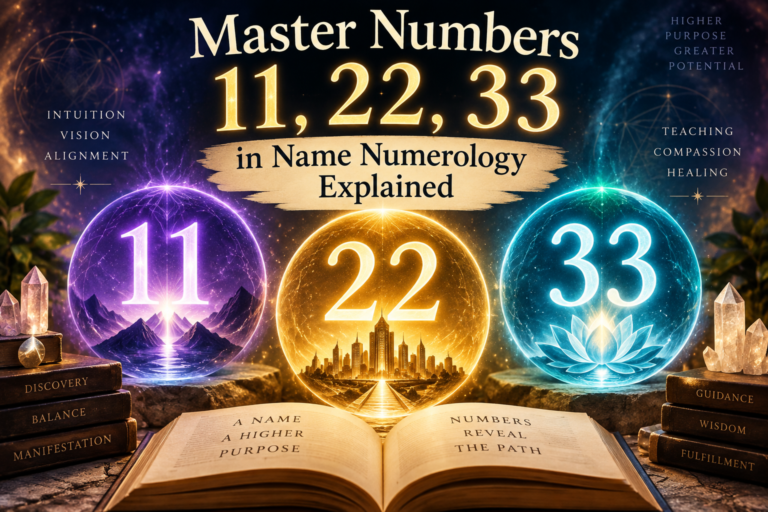
Master numbers — 11, 22, and 33 — get a lot of attention in numerology because they’re left unreduced rather than following the standard reduction rule that applies to every other number. This has led to a popular assumption that having a master number in your name or birth date guarantees an unusually significant or successful life path.
Most traditional numerology resources actually describe master numbers as carrying heightened potential alongside heightened difficulty, not a straightforward advantage. Number 11 is associated with intense intuition paired with internal tension. Number 22 is associated with large-scale ambition paired with a heavy practical burden to actually deliver on that ambition. The idea that a master number is purely beneficial oversimplifies what most serious numerology sources actually say about them.
Myth 4: Numerology and Astrology Are the Same Thing
This is another entry worth including in any thorough Numerology Myths Debunked breakdown, since the two get confused constantly, partly because they’re often discussed together and partly because both assign personal meaning to something outside a person’s direct control. But they work through entirely different mechanisms. Astrology is based on the position of celestial bodies at the moment of birth, mapped onto a birth chart with signs, houses, and planetary positions. Numerology is based on arithmetic performed on a name’s letters or a birth date’s digits, with no reference to celestial positioning at all.
Some numerology systems do overlap with astrological concepts — number 1, for instance, is frequently linked to the Sun, and number 7 to Neptune — but this overlap reflects a shared symbolic tradition rather than the two practices being interchangeable. Treating them as identical, which happens constantly in casual conversation, blurs distinctions that matter to anyone trying to understand either system properly.
Myth 5: A Numerology Reading Can Predict Exact Future Events
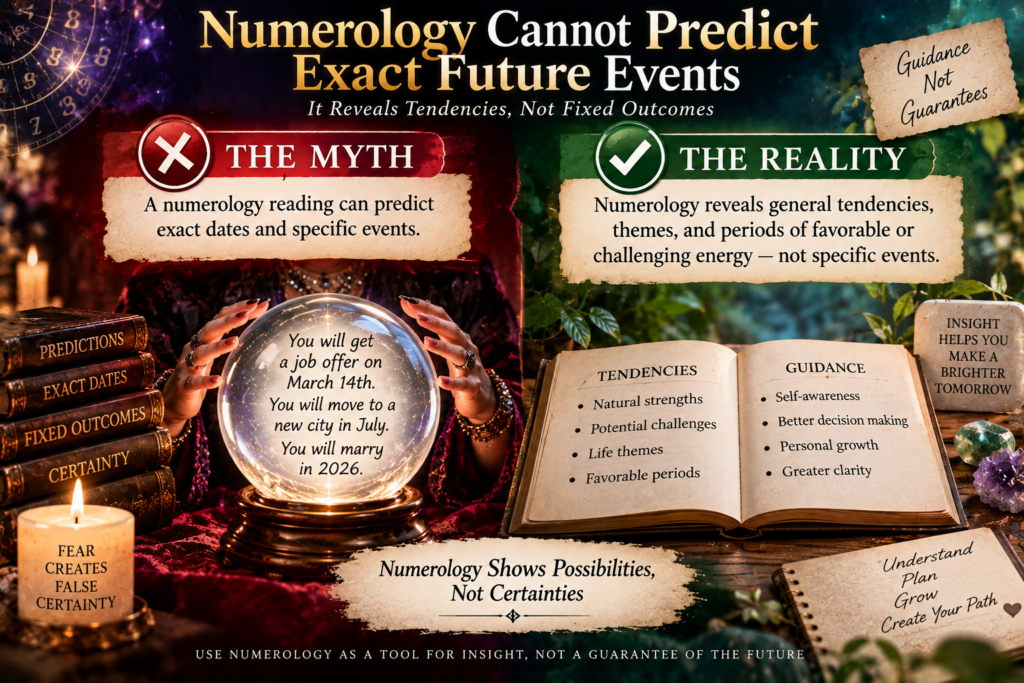
This is one of the most persistent misconceptions, and it’s worth addressing directly in any honest Numerology Myths Debunked resource. Even numerologists who take the practice seriously generally don’t claim it can predict a specific date, a specific event, or an exact future outcome. Traditional readings describe general tendencies, themes, and periods of favorable or challenging energy — not precise, falsifiable predictions like “you will get a job offer on March 14th.”
When a numerology-based prediction does appear to come true with striking specificity, it’s far more likely explained by the Barnum effect — the well-documented psychological tendency to read vague, broadly applicable statements as personally and specifically accurate — combined with confirmation bias, where a matching event gets remembered vividly while the many non-matching predictions fade from memory unnoticed.
Myth 6: Changing Your Name Spelling Instantly Changes Your Life
Another common misread in the Numerology Myths Debunked category involves timing. Some numerology-adjacent advice implies that adjusting a single letter in a name’s spelling produces an immediate, noticeable shift in luck or circumstances. While a spelling change does mathematically alter a name’s expression number — that part is simply arithmetic — most experienced practitioners describe the effect, if any, as gradual and tied to how consistently the new spelling is actually used in daily life, not an instant switch that flips on the moment paperwork is filed.
This myth tends to set people up for disappointment when a spelling correction doesn’t produce the dramatic change they were expecting, when a more grounded reading of numerology tradition would have framed the change as one gradual input among many factors shaping a person’s life, not a guaranteed shortcut.
Myth 7: Numerology Compatibility Guarantees Relationship Success or Failure
Numerology compatibility charts, which compare two people’s life path or expression numbers, are often treated as a definitive verdict on whether a relationship will work. In practice, most numerology traditions present compatibility readings as one factor worth considering among many, not a binding prediction that overrides everything else about how two people actually communicate, share values, and build a life together.
A “challenging” compatibility reading between two numbers doesn’t doom a relationship, and a “strong” reading doesn’t guarantee one will succeed either. Treating numerology compatibility as a strict gatekeeping mechanism, rather than one lens among several, is a misuse of what the practice actually claims to offer.
Myth 8: Numerology Is a Modern Internet-Era Invention
A less discussed but still common item in the Numerology Myths Debunked list involves assumptions about age and origin. Given how often numerology calculators show up in casual online content, some assume the practice itself is a relatively recent phenomenon built for web traffic. In reality, numerology’s roots stretch back thousands of years, with Pythagorean numerology tracing to ancient Greece and Chaldean numerology tracing back even further to ancient Babylon. Vedic numerology traditions across South Asia carry similarly deep historical roots, often intertwined with astrology and religious practice passed down across many generations.
The modern, easily accessible calculator is a recent convenience layered on top of a genuinely old practice, not evidence that the underlying tradition itself is new or invented for the internet.
Myth 9: Every Numerologist Interprets Numbers the Same Way
Because numerology involves fixed arithmetic, it’s easy to assume the interpretation attached to each result is equally fixed and universally agreed upon. In practice, different numerology traditions, schools, and individual practitioners often diverge meaningfully in how they interpret the same number, particularly around compound numbers, karmic debt numbers, and the finer details of compatibility readings. Two numerologists calculating the exact same expression number for the same name can offer noticeably different interpretations, depending on which tradition and which specific resources they were trained on.
This variation is worth keeping in mind whenever comparing a reading from one source against another — a disagreement in interpretation doesn’t necessarily mean either source made an error, since interpretation, unlike calculation, isn’t standardized across the field.
Myth 10: You Have to Believe in Numerology for It to “Work”
This claim gets presented both ways — some insist belief is required for accuracy, others insist the numbers work regardless of belief, as an objective, measurable force. Neither framing holds up particularly well under scrutiny. Since no controlled study has demonstrated that numerology reliably predicts personality or outcomes beyond chance, there’s no established mechanism through which belief would meaningfully change a number’s accuracy one way or the other.
What does change with belief is the psychological experience of engaging with a reading — someone who takes the practice seriously is more likely to reflect deeply on a description and find personal meaning in it, while a skeptic reading the same description is more likely to notice inconsistencies. This is a genuine difference in experience, but it isn’t evidence that belief itself alters the underlying accuracy of the calculation.
Why These Myths Persist
A handful of recurring factors explain why misconceptions like these spread and stick around. Numerology content online is frequently written without much regard for which specific tradition or system it’s drawing from, blending Chaldean and Pythagorean concepts without labeling either one clearly. Popular culture references to numerology, especially around numbers like 13 or master numbers, often borrow loosely from the practice without representing it accurately. And because numerology touches on deeply personal topics — identity, relationships, life direction — people tend to share and remember striking claims about it more readily than careful, qualified explanations.
Addressing this kind of confusion directly is really the purpose behind a resource like this one: not to dismiss numerology altogether, but to make sure the version of it being discussed and debated actually reflects what the practice claims, rather than a simplified or exaggerated version that’s drifted away from the source material over time.
Myth 11: All Numerology Calculators Give the Same Reduction Rules
A less obvious but genuinely important entry in this Numerology Myths Debunked roundup involves reduction rules themselves, not just letter values. It’s easy to assume that once a total is calculated, every calculator handles the reduction step the same way — but this isn’t consistently true. Some calculators reduce every total straight down to a single digit without checking for master numbers along the way, silently skipping 11, 22, or 33 if one appears as an intermediate compound number rather than only at the final step. Others apply master number recognition inconsistently, catching it in a final result but missing it earlier in the calculation.
This inconsistency means two calculators can start with the exact same name, use the exact same letter system, and still produce different final numbers purely because of how each one handles the reduction process itself. Anyone comparing results across multiple tools should check not just which letter system is being used, but whether master numbers are being consistently recognized throughout the entire calculation, not just at the very end.
How to Spot a Numerology Myth Before Believing It
A few practical habits make it easier to separate accurate numerology information from exaggerated or borrowed claims circulating online. Checking whether a specific source names which system — Pythagorean or Chaldean — it’s drawing from is one of the fastest filters, since a resource that blends both without acknowledging it is often working from secondhand summaries rather than a grounded understanding of either tradition. Claims involving guaranteed outcomes, exact dates, or absolute compatibility verdicts are also worth treating with extra scrutiny, since traditional numerology practice generally frames its readings in terms of tendencies and themes rather than fixed certainties.
Cross-referencing a surprising claim against more than one established resource, rather than accepting a single site’s explanation at face value, also helps catch claims that have drifted from their original meaning through repeated informal retelling — which is, after all, how most of the myths covered in this guide took hold in the first place.
Frequently Asked Questions
Is it true that numerology and astrology use the same calculations?
No. Astrology is based on planetary and celestial positions at the time of birth, while numerology is based on arithmetic performed on a name’s letters or a birth date’s digits. Any overlap between the two is symbolic rather than mechanical — one of the most frequently repeated mix-ups this Numerology Myths Debunked guide sets out to clear up.
Are master numbers always considered lucky?
Not exclusively. Most traditional numerology sources describe master numbers as carrying both heightened potential and heightened internal challenge, rather than framing them as a simple, uncomplicated advantage over standard single-digit numbers.
Can numerology tell me the exact date something will happen?
Most serious numerology practice doesn’t claim this level of specific predictive accuracy. Readings typically describe general tendencies and favorable or challenging periods rather than precise, falsifiable events — one of the more overstated claims that a solid Numerology Myths Debunked review needs to address directly.
Does changing my name spelling guarantee better luck immediately?
No. While a spelling change does alter a name’s calculated expression number, any perceived effect is generally described as gradual and tied to consistent everyday use of the new spelling, not an instant shift.
Why do different numerologists sometimes give different readings for the same number?
Because interpretation, unlike the underlying arithmetic, isn’t standardized across numerology traditions. Different schools of thought and individual practitioners can reasonably differ on how they interpret the same calculated number.
Are all the myths in this guide equally common?
Not quite. Confusion between numerology and astrology, along with the assumption that spelling changes work instantly, tend to come up most often in casual conversation, while the reduction-rule and compatibility-related items in this Numerology Myths Debunked guide are somewhat more specialized, showing up mostly among people who already engage with numerology fairly regularly.
Final Thought
This Numerology Myths Debunked guide isn’t meant to argue for or against numerology as a whole — it’s meant to separate what the practice actually claims from the exaggerated, oversimplified, or borrowed ideas that have attached themselves to it over time. Understanding the real distinctions between systems, the actual scope of what a reading claims to offer, and where cultural superstition ends and structured numerology tradition begins makes for a far more accurate, and ultimately more useful, way to engage with the practice