Name Number Differs Across Calculators Here’s Exactly Why
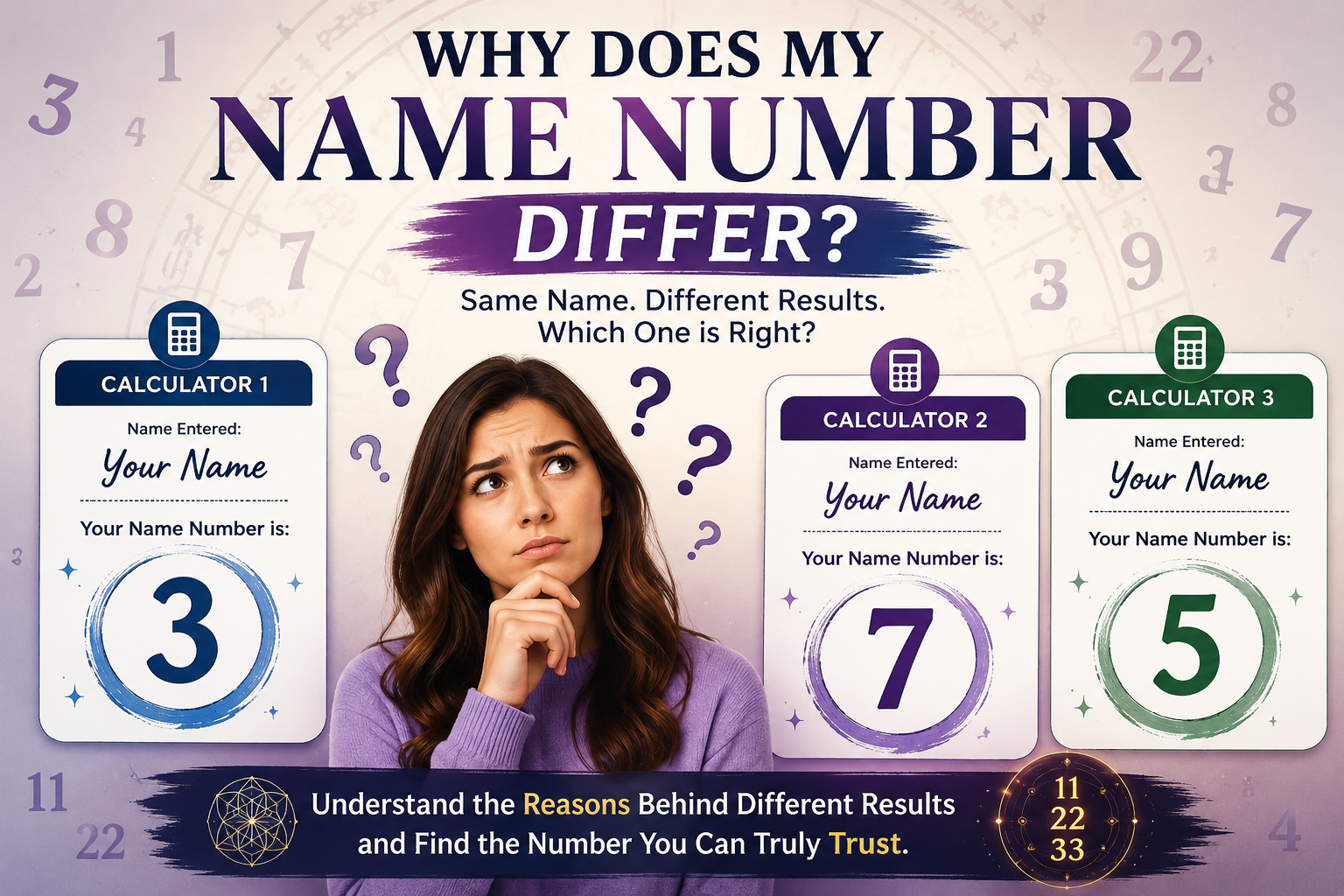
Type your name into one numerology calculator and you get a 3. Try a second site, using the exact same spelling, and suddenly you’re a 7. Try a third, and it’s a 5. If your name number differs every time you check it, the first instinct is usually to assume one of the calculators is broken, or that you typed something wrong. In reality, neither is true — there’s a small number of specific, identifiable reasons behind it, and once you know what they are, you can figure out exactly which number to trust and why.
This guide breaks down every major reason your name number differs from one calculator to the next, so you stop second-guessing the math and start understanding the method.
Reason 1: Different Calculators Use Different Letter Systems
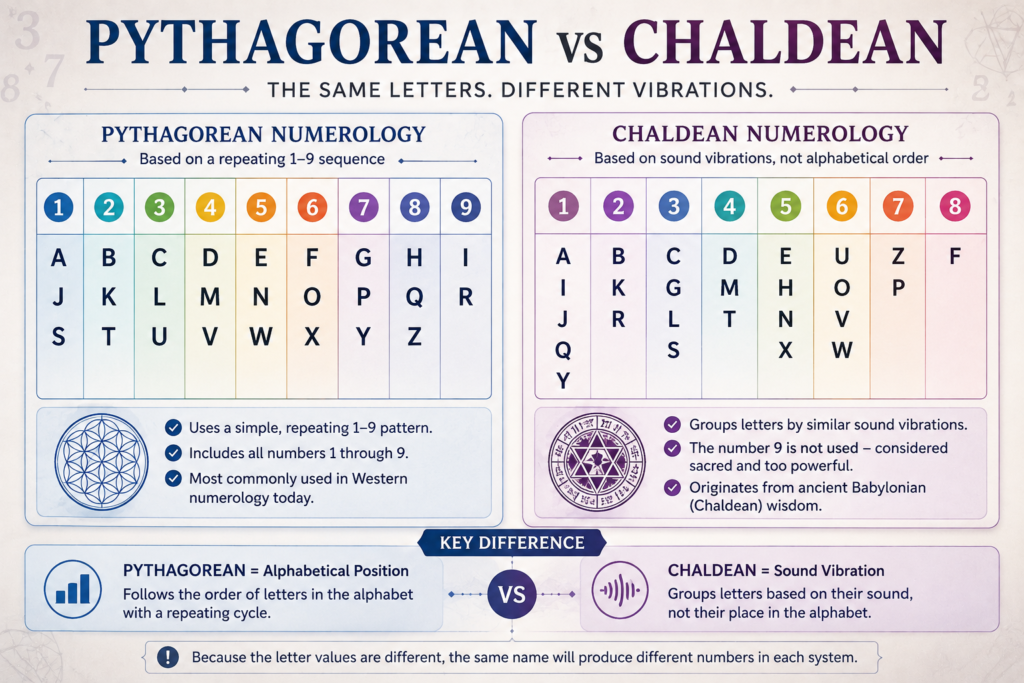
This is, by far, the biggest reason a name number differs from site to site. Numerology has two dominant frameworks for converting letters into numbers — Pythagorean numerology and Chaldean numerology — and they don’t share the same letter-to-number chart.
Pythagorean numerology assigns digits 1 through 9 to the alphabet in a strict, repeating sequence: A is 1, B is 2, and so on, looping back to 1 after I. It’s simple, predictable, and used by most Western-built calculators and apps.
Chaldean numerology, which traces back to ancient Babylon, works completely differently. Letters are grouped by the vibration of their sound rather than their position in the alphabet, which means the number groupings look uneven, and the number 9 is deliberately excluded from the chart altogether, treated as too significant to assign to any single letter.
Run the same name through both systems and you’re not really running the “same calculation” twice — you’re running two different calculations that happen to share an input. A calculator using Pythagorean logic and one using Chaldean logic will almost never agree, and that’s expected, not a bug.
How to check which system a calculator is using: look up the letter U. In Pythagorean numerology, U is 3. In Chaldean numerology, U is grouped with O, V, and W under the number 6. If a site gives U a different value than you’d expect from a Pythagorean chart, it’s running Chaldean logic behind the scenes.
Reason 2: They’re Calculating a Different Type of Name Number
“Name number” is often used as a catch-all term, but numerology actually breaks a name down into several distinct numbers, each built from a different part of the name:
- Expression number (also called destiny number): calculated from every letter in the full name
- Soul urge number (also called heart’s desire number): calculated from vowels only
- Personality number: calculated from consonants only
If one calculator is showing you your expression number and another is showing you your soul urge number, your name number differs for a simple reason — they’re answering two completely different questions about the same name, not disagreeing on the same one. Before comparing two results, it’s worth checking the label on each calculator’s output rather than assuming “name number” means the same thing everywhere.
Reason 3: Full Name vs. Commonly Used Name
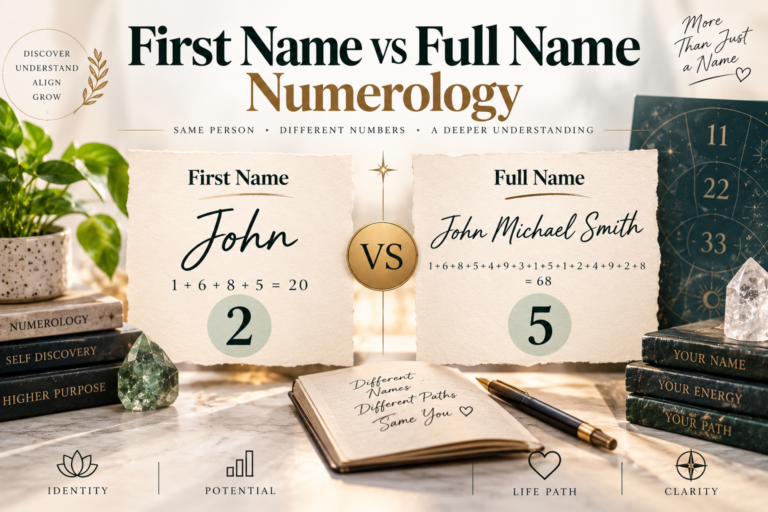
Some calculators ask for your complete legal name exactly as it appears on your birth certificate. Others default to whatever name you type in, which might be a nickname, a shortened first name, or a name without a middle name included.
Since every letter in the input contributes to the final total, even a small difference — dropping a middle name, using “Mike” instead of “Michael,” or leaving out a maiden name — changes the sum, and can easily shift the final reduced digit. This is another common reason a name number differs between two attempts even on the exact same calculator: it’s not a flaw in the math, simply a different input producing a different, entirely valid output for that specific version of the name.
If you want a result that matches what most traditional numerology resources would produce, it’s generally recommended to use your full birth name exactly as recorded, rather than a nickname or shortened version.
Reason 4: Rounding and Reduction Rules Around Master Numbers
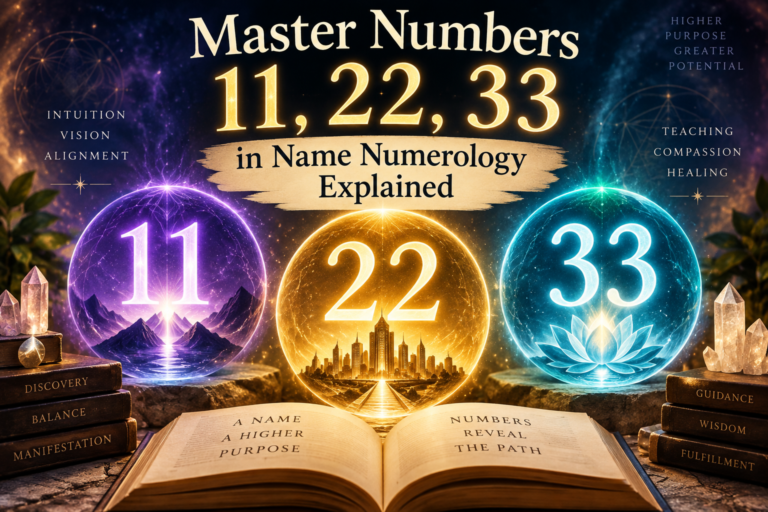
Most numerology calculations reduce a total down to a single digit between 1 and 9. But there’s a well-known exception: master numbers, typically 11, 22, and 33. When a calculation lands on one of these totals, most traditional systems stop reducing and leave the master number as-is, since it’s considered to carry a more intense meaning than a standard single-digit number.
The inconsistency shows up when a calculator doesn’t follow this convention properly, either reducing straight through to a single digit regardless of the total, or applying master number logic inconsistently at different stages of the calculation. This is one of the quieter reasons two tools claiming to use the same base system can still produce different totals.
Reason 5: How Compound Numbers Are Handled Along the Way
Before a name number gets reduced to its final single digit, it typically passes through what’s called a compound number a two-digit total produced partway through the calculation. Some numerology traditions, particularly those working within Chaldean methodology, place meaning on this compound number itself, not just the final reduced digit, and may present both numbers as part of a full reading.
A calculator that only shows you the final reduced digit and skips the compound number stage isn’t giving you wrong information, just less of it. If you’re comparing two calculators and one shows an extra number alongside the final result, that’s very likely the compound number being surfaced — not a separate disagreement about your name.
Reason 6: Some Sites Blend Systems Without Saying So
This one is less about tradition and more about site design. Some numerology calculators, especially free tools built quickly for web traffic, mix elements from both Pythagorean and Chaldean systems without clearly documenting which rules they’re following where. Instead of picking a clear side in the Pythagorean vs Chaldean divide, they quietly borrow from both — which is one of the harder mismatches to spot from the outside, since the site never tells you it’s blending two methods in the first place.
There’s no easy way to catch this from the outside beyond checking a few key letters (like the U-check mentioned earlier) and noticing if the results consistently sit somewhere between what pure Pythagorean vs Chaldean logic would separately produce.
How to Actually Compare Two Calculators Fairly
If you want to figure out whether your name number differs for a genuine reason or just because two tools are doing different things, run through this quick checklist:
- Confirm both are calculating the same number type — expression/destiny, soul urge, or personality — not different parts of the name.
- Use the exact same spelling of your name in both, including middle names, exactly as you’d write it on official documents.
- Check which letter system each is using with the U-test described above.
- Note whether either result is a master number, and confirm the site explains its reduction rules.
Once all four of these line up, two calculators built on the same system should return the same result every time. If your name number differs even after all four checks match, that’s a genuine calculator error worth flagging but in most cases, the mismatch traces back to one of the six reasons above.
Frequently Asked Questions
Is it normal for numerology results to vary this much between sites?
Yes. Given the number of variables involved — letter system, name version used, number type being calculated, and reduction rules — variation between sites is the norm rather than the exception, especially when comparing free calculators that don’t document their methodology.
Which name number should I trust as the “real” one?
There isn’t a single official version, since numerology itself isn’t standardized across traditions. The more useful approach is picking one system (Pythagorean or Chaldean) and one consistent version of your name, then sticking with that combination for any future comparisons or tracking.
Should I use my full birth name or my everyday name?
Most traditional numerology practice favors the full birth name, since it’s considered the most complete and unchanging version of a name. That said, some practitioners also calculate a secondary reading using a commonly used name to reflect how a person is perceived day to day.
Does adding a married or legally changed name affect the result?
Yes. Because every letter in the input contributes to the total, any legal name change — through marriage, adoption, or a formal name change — will produce a different expression number than the birth name did, which is why some people calculate both versions to compare.
Why do two calculators using the same system still occasionally disagree?
This usually comes down to name input differences (a missing middle name, different capitalization handling, or extra spaces) or inconsistent master number and compound number handling, rather than a disagreement in the underlying letter chart itself.
Final Thought
A name number differs on every calculator you try isn’t a sign that numerology “doesn’t work” or that the math is unreliable — it’s a sign that several different variables are in play at once: which letter system is being used, which specific number is being calculated, which version of your name was entered, and how master numbers are handled along the way. Once those variables are controlled for, the results become consistent and predictable, which is really what makes a number worth tracking in the first place.