House Number Numerology Meaning: What Your Home Number Reveals
Have you ever wondered whether the number on your front door has a deeper meaning? In numerology, house numbers are traditionally believed to carry symbolic energy that may reflect the atmosphere, experiences, and themes associated with a home. The House Number Numerology Meaning system offers a simple way to explore these interpretations using the numbers connected to your address.
Whether you live in an apartment, a family house, or a rented property, you can calculate your home’s numerology number using a straightforward method. Each number from 1 to 9 has its own traditional symbolism, ranging from independence and ambition to harmony, creativity, and compassion.
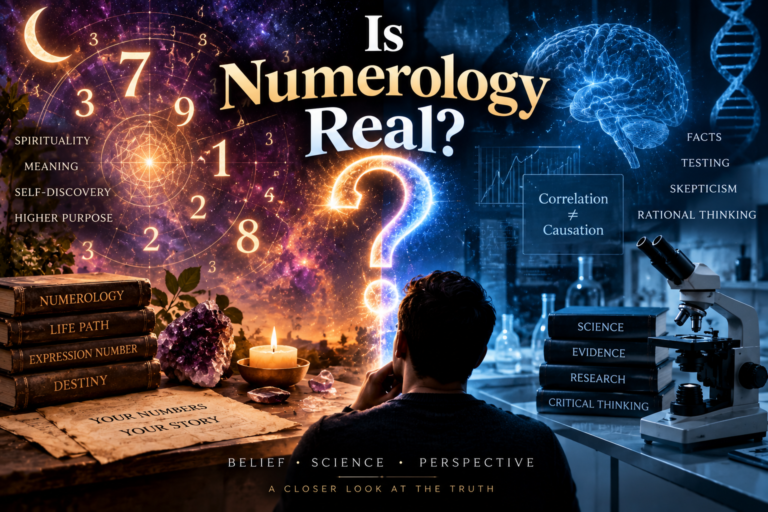
In this guide, you will learn how to calculate your house number, understand the meanings of individual numbers, and explore how different home numbers are interpreted in numerology. Remember that these meanings are part of a spiritual and cultural belief system, not scientifically proven descriptions of a home or its residents.
What Is House Number Numerology?
House number numerology is a branch of traditional numerology that assigns symbolic meanings to the numbers in a residential address. According to this belief system, the number associated with a home may represent certain themes or qualities connected with the living environment.
For example, a home with the number 1 is traditionally associated with independence, leadership, and new beginnings. A home with the number 2 is often linked with cooperation, emotional connection, and peaceful relationships.
People interested in numerology sometimes use these interpretations to reflect on their living spaces, personal goals, and family environments.
However, house number numerology should be viewed as a tool for personal reflection rather than a reliable way to predict events, relationships, financial success, or future experiences.
How to Calculate Your House Number in Numerology
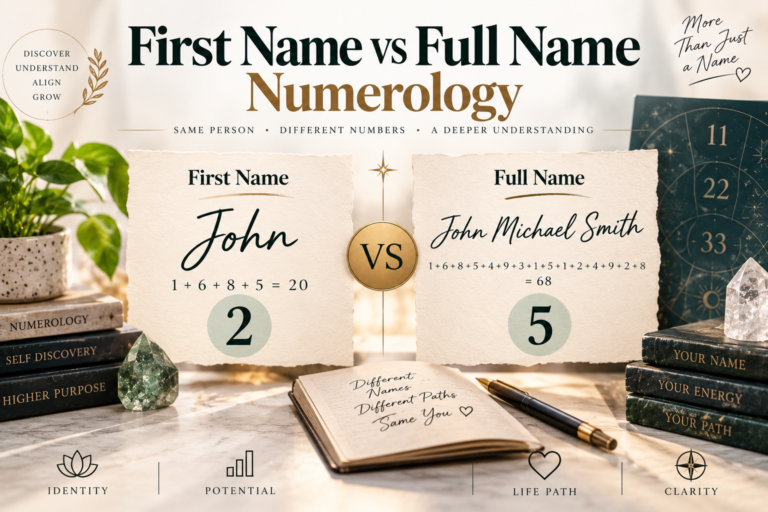
Calculating your home number is simple. The most common method involves adding the digits of your house number until you reach a single digit between 1 and 9.
Step 1: Write Down Your House Number
Start with the numerical part of your residential address.
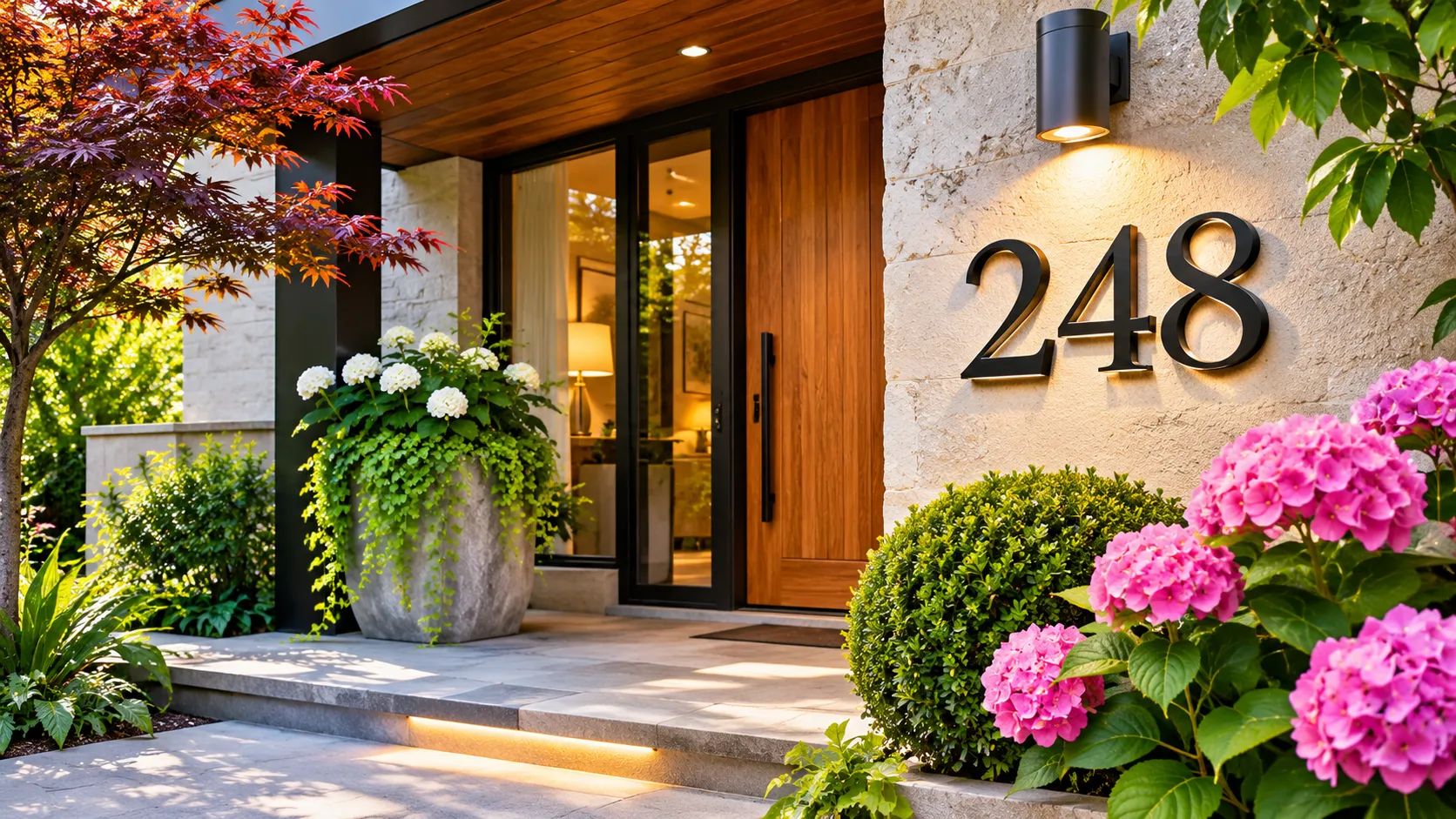
For example, if your house number is 248, write down:
2, 4, and 8.
Step 2: Add All the Digits Together
Add the digits to get a total:
2 + 4 + 8 = 14
Step 3: Reduce the Total to a Single Digit
If the answer contains two digits, add those digits again:
1 + 4 = 5
Your final house number is 5.
More Examples of House Number Calculations
Here are some additional examples to make the process easier:
| House number | Calculation | Final number |
|---|---|---|
| 16 | 1 + 6 | 7 |
| 27 | 2 + 7 | 9 |
| 123 | 1 + 2 + 3 | 6 |
| 305 | 3 + 0 + 5 | 8 |
| 456 | 4 + 5 + 6 = 15; 1 + 5 | 6 |
| 789 | 7 + 8 + 9 = 24; 2 + 4 | 6 |
The final single digit is commonly called the home’s numerology number.
What If Your Address Contains Letters?
Some homes and apartments have addresses such as 12A, 24B, or Apartment C.
In numerology systems that include letters, each letter may be assigned a numerical value. Under the commonly used Pythagorean system, the letter values are:
| Number | Letters |
|---|---|
| 1 | A, J, S |
| 2 | B, K, T |
| 3 | C, L, U |
| 4 | D, M, V |
| 5 | E, N, W |
| 6 | F, O, X |
| 7 | G, P, Y |
| 8 | H, Q, Z |
| 9 | I, R |
For example, consider house number 12A:
1 + 2 + 1 = 4
The resulting number is 4.
Different numerology practitioners may use different address-calculation methods. For consistency, choose one method and use it throughout your interpretation.
House Number Numerology Meaning: Numbers 1 to 9 Explained
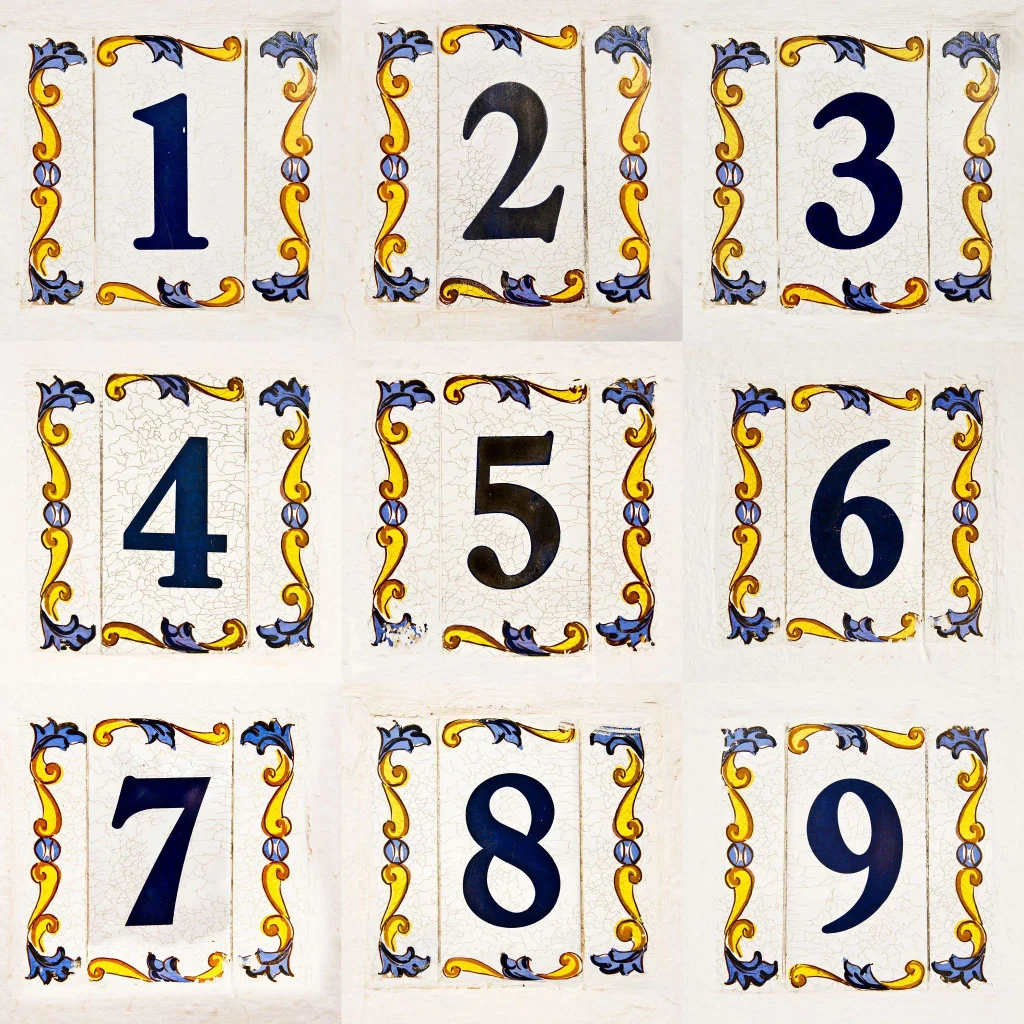
Every number from 1 to 9 has a distinct traditional interpretation. Understanding these meanings can help you explore the symbolic character associated with your home.
House Number 1: Independence and New Beginnings
Number 1 is traditionally associated with independence, leadership, ambition, and fresh starts.
A home with this number is often interpreted as a suitable symbolic environment for people who value personal freedom and want to focus on individual goals. It is sometimes connected with entrepreneurs, independent thinkers, and people beginning a new chapter in life.
Traditional themes of a number 1 home:
- Independence and self-confidence
- Leadership and ambition
- Personal development
- New opportunities and beginnings
- Individual creativity
The possible challenge associated with this number is an excessive focus on independence. In traditional interpretations, residents may benefit from balancing personal ambitions with cooperation and shared responsibilities.
House Number 2: Harmony and Relationships
Number 2 is commonly connected with cooperation, emotional understanding, partnership, and balance.
In house numerology, this number is often associated with homes where relationships, family connections, and peaceful communication are important themes.
Traditional themes of a number 2 home:
- Partnership and cooperation
- Emotional sensitivity
- Peaceful communication
- Family relationships
- Understanding and patience
A number 2 home is sometimes described as having a gentle and supportive symbolic atmosphere. Its traditional challenge is avoiding overdependence or ignoring personal needs to keep everyone happy.
House Number 3: Creativity and Joy
Number 3 represents creativity, communication, self-expression, and enthusiasm in many numerology traditions.
A home associated with this number is often interpreted as a lively place where social activities, artistic interests, and communication are encouraged.
Traditional themes of a number 3 home:
- Creativity and imagination
- Social connections
- Communication and expression
- Optimism and enthusiasm
- Entertainment and enjoyment
This number is sometimes associated with artists, writers, performers, and people who enjoy hosting friends.
The traditional challenge of number 3 is maintaining focus and organization rather than becoming distracted by too many activities.
House Number 4: Stability and Security
Number 4 is traditionally associated with structure, discipline, responsibility, and practical foundations.
A number 4 home is often interpreted as a symbol of stability and consistency. It may appeal symbolically to people who value routines, organization, and long-term planning.
Traditional themes of a number 4 home:
- Stability and security
- Discipline and responsibility
- Practical thinking
- Organization and structure
- Long-term foundations
The challenge associated with this number is becoming too rigid or resistant to change. Traditional interpretations encourage residents to balance responsibility with flexibility and relaxation.
House Number 5: Freedom and Adventure
Number 5 is linked with freedom, movement, curiosity, and change.
In house numerology, a home with this number is often described as symbolically connected with activity, new experiences, travel, and social interaction.
Traditional themes of a number 5 home:
- Freedom and independence
- Adventure and exploration
- Communication and social life
- Change and flexibility
- Curiosity and variety
People who enjoy meeting new people or exploring different interests may find the symbolism of number 5 appealing.
Its traditional challenge is maintaining consistency and avoiding an overly unpredictable routine.
House Number 6: Family and Responsibility
Number 6 is widely associated with family, care, responsibility, beauty, and harmony.
A number 6 home is traditionally interpreted as a place connected with nurturing relationships, family life, and a comfortable domestic environment.
Traditional themes of a number 6 home:
- Family and togetherness
- Love and compassion
- Responsibility and support
- Beauty and comfort
- Community and care
This number is often linked with people who enjoy decorating their homes, caring for loved ones, and creating welcoming spaces.
Its possible challenge is taking on too many responsibilities or trying to solve everyone’s problems.
House Number 7: Reflection and Spiritual Growth
Number 7 is traditionally connected with knowledge, introspection, spirituality, and personal discovery.
A home with this number is often interpreted as a symbolic space for quiet thinking, learning, research, and self-reflection.
Traditional themes of a number 7 home:
- Personal reflection
- Knowledge and learning
- Spiritual exploration
- Privacy and quietness
- Intuition and inner growth
People who enjoy reading, studying, meditation, or spending time alone may appreciate the traditional symbolism of this number.
The challenge associated with number 7 is becoming too isolated or disconnected from social relationships.
House Number 8: Ambition and Achievement
Number 8 is commonly associated with ambition, financial responsibility, authority, and material achievement.
In house numerology, this number is sometimes interpreted as representing goals, business activities, discipline, and long-term success.
Traditional themes of a number 8 home:
- Ambition and achievement
- Leadership and authority
- Financial responsibility
- Business and organization
- Confidence and determination
Some numerology traditions associate this number with people who have professional ambitions or enjoy building long-term financial stability.
However, number 8 does not guarantee wealth or business success. Its traditional challenge is maintaining balance between work, personal relationships, and well-being.
House Number 9: Compassion and Completion
Number 9 is often associated with compassion, generosity, wisdom, and humanitarian values.
A number 9 home is traditionally interpreted as symbolically connected with kindness, understanding, and concern for others.
Traditional themes of a number 9 home:
- Compassion and generosity
- Humanitarian interests
- Wisdom and personal growth
- Forgiveness and understanding
- Completion and transformation
This number is sometimes linked with people who value helping others, supporting communities, and creating an inclusive environment.
Its traditional challenge is giving too much without considering personal boundaries and needs.
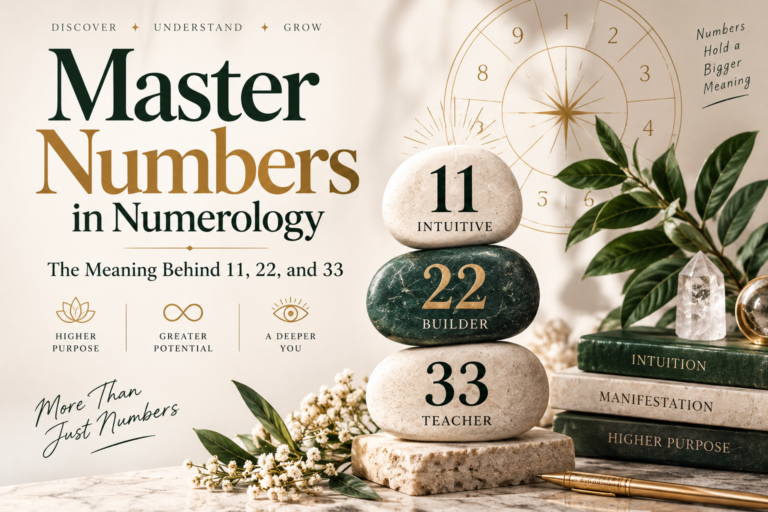
What Do Master Numbers 11, 22, and 33 Mean in House Numerology?
Some numerology traditions recognize 11, 22, and 33 as Master Numbers. They are often interpreted differently from ordinary single-digit numbers.
There is no universal agreement about whether Master Numbers should be retained when calculating a house number. Some practitioners reduce every total to a single digit, while others preserve these numbers when they appear directly in an address or as an intermediate total.
House Number 11: Intuition and Inspiration
Number 11 is traditionally connected with intuition, inspiration, sensitivity, and spiritual awareness.
A home associated with 11 may be interpreted as a symbolic place for creative thinking, personal reflection, and emotional awareness.
Its reduced number is 2, so some practitioners also consider themes of partnership and cooperation.
House Number 22: Vision and Practical Achievement
Number 22 is often called the Master Builder in numerology.
Its traditional symbolism combines big ideas with practical planning, organization, and the ability to build lasting foundations.
Its reduced number is 4, connecting it with stability, discipline, and responsibility.
House Number 33: Compassion and Service
Number 33 is traditionally associated with compassion, generosity, teaching, and service to others.
It is sometimes interpreted as a number connected with nurturing relationships and supporting people through kindness and understanding.
Its reduced number is 6, which is associated with family, care, and domestic harmony.
Does Your Apartment Number Matter in Numerology?
Yes, apartment numbers can be included in house numerology, although different practitioners follow different approaches.
For example, imagine you live in apartment 205.
Add the digits:
2 + 0 + 5 = 7
Using this method, your apartment number is 7, which is traditionally associated with reflection, privacy, and learning.
Some numerology practitioners use the apartment number alone, while others consider the complete building address as well.
If you want to explore both approaches, calculate each number separately and compare their traditional interpretations. Avoid assuming that one method is universally correct.
Should You Use Your House Number or Full Address?
This is one of the most common questions people ask when exploring residential numerology.
The simplest approach is to begin with the numerical part of your house or apartment number.
For example:
- House number: 248
- Building number: 15
- Apartment number: 302
You can calculate each one separately:
- 248 = 2 + 4 + 8 = 14 = 5
- 15 = 1 + 5 = 6
- 302 = 3 + 0 + 2 = 5
Different numerology traditions may give priority to the apartment number, the house number, or the full address. There is no single scientifically established formula.
For a simple and consistent reading, choose the number that most directly identifies your individual home and use the same calculation method when comparing addresses.
Can Your House Number Affect Your Life?
Numerology enthusiasts sometimes believe that a house number reflects the symbolic atmosphere of a living space. For example, they may associate number 6 with family life or number 8 with ambition and financial goals.
However, there is no reliable scientific evidence that a house number determines a person’s personality, financial situation, relationships, or future.
Your everyday home experience is influenced by practical factors such as:
- The quality and safety of the building
- Your relationships with other residents
- Financial circumstances
- Location and surrounding environment
- Comfort, privacy, and personal habits
You can enjoy numerology as a cultural or spiritual interest while making important housing and financial decisions based on practical information.
How to Make Your Home Feel More Positive and Comfortable
Regardless of your house number, you can create a welcoming environment through thoughtful choices and everyday habits.
Keep Your Living Space Organized
A clean and organized home can make everyday activities easier. Remove unnecessary clutter, arrange frequently used items, and create practical storage areas.
Use Lighting to Improve the Atmosphere
Natural light can make rooms feel more open and comfortable. Use suitable lamps and lighting arrangements to create a pleasant environment during the evening.
Choose Colors That You Enjoy
Select colors that make you feel comfortable. Soft neutrals can create a calm appearance, while brighter accents can add personality and visual interest.
Create a Space for Relaxation
Consider adding a reading corner, comfortable seating, or a small area for hobbies. A dedicated relaxation space can encourage a healthier daily routine.
Build Positive Household Habits
Respectful communication, shared responsibilities, and regular time together can help create a supportive home environment.
These practical steps can improve how a home feels without relying on its numerological interpretation.
Frequently Asked Questions About House Number Numerology
1. How do I calculate my house number in numerology?
Add all the digits in your house number together. If the result contains more than one digit, add those digits again until you reach a single number from 1 to 9. For example, 248 becomes 2 + 4 + 8 = 14, and 1 + 4 = 5.
2. Which house number is considered lucky in numerology?
There is no universally agreed-upon lucky house number. Some traditions associate number 8 with ambition and achievement, number 6 with family harmony, and number 9 with compassion. The interpretation depends on the numerology tradition being followed.
3. Is house number 4 unlucky?
No. Although some cultural traditions attach negative associations to certain numbers, house number 4 is traditionally linked with stability, discipline, responsibility, and strong foundations in many numerology interpretations.
4. Should I include my apartment number when calculating house numerology?
You can calculate your apartment number separately, or use the complete residential address depending on the method you follow. Different practitioners use different approaches, so consistency is more important than assuming there is one universally accepted formula.
5. Can I change my house number if its numerology meaning is negative?
There is no established reason to change a house number because of a numerological interpretation. These meanings are symbolic beliefs, not scientific predictions. Consider practical factors such as safety, affordability, comfort, and location when making housing decisions.
Conclusion
Exploring the house number numerology meaning can be an interesting way to learn about the traditional symbolism of numbers and reflect on the atmosphere you want in your living space. From the independence of number 1 to the compassion of number 9, every number has its own interpretation within numerology traditions.
You can calculate your home number in just a few steps and explore what its symbolism represents. Master Numbers 11, 22, and 33 also offer additional interpretations in some numerology systems.
Most importantly, remember that a comfortable and meaningful home is shaped by the people who live in it, their relationships, and the everyday choices they make. Use numerology as a source of curiosity and personal reflection, while relying on practical considerations when making important decisions about your home.